


Neuk_
Honorary Master
That's interesting
Yeah, I took that a while back, I did manage to get the batteries to charge using grid a short time ago but am done testing for the night. Tomorrow is another day...
South Africa’s biggest forum. Discuss, discover, and connect with thousands of members.
That's interesting

So it's working now?Yeah, I took that a while back, I did manage to get the batteries to charge using grid a short time ago but am done testing for the night. Tomorrow is another day...
So it's working now?


I assume you have an external contactor for the earth-neutral bond? You might have to go enable that island signal option again after the factory reset.

What about those instant hot water electric geysers? Then you'll save on standing losses of 3kWh a day per geyser?Long overdue update...
While our ESS has been working as designed and intended, winters have become more of an issue, especially after our second son was born and we had more heating requirements. We have always had a pretty high load with two electric geysers, swimming pool, dishwasher, washing machine, two ovens, air fryer, tumble dryer, kettle, microwave, lighting, electric fence, CCTv, alarm, computers, etc, etc. Summer is generally fine other than rainy weather but our house layout, orientation and neighbouring trees winter is struggle with a maximum of 25kWh available via PV on a good day.
So we end up using a lot of mains supply while I manage the batteries and load to minimise using mains supply as much as possible but maximise PV use. Some days load management is an issue, like on Wednesdays when I am at the office and our nanny, domestic and gardener are at home, using anything and everything. I have an HA automation that monitors house load and if it goes over 9kW it will provide warnings and switch off geysers, heaters, swimming pool, etc. to not overload the inverter.
All of this coupled with my wif'e's interest in an EV to complement two other EV's in the family had me looking at how to get more out of our current system. We had started the process of moving the inverter and batteries from the house to the garage, so it was a good time to look at any changes and get it all done at once. I started with looking at adding more PV, we already have 2 strings of eight 545W Longi Mono PV Panels on the two MPPT's, so would need to add other strings to the MPPT's being mindful of their limits.
Another MPPT would be very useful as we could add another eight 600 odd W PV panels well within limits and have the option of making a plan with adding other strings to existing MPPT's in the future. I looked at replacing the 8kW Sunsynk we have with a larger inverter which would give us more inverter capacity but also more MPPT's and inverter pricing is pretty good at the moment. I looked at adding another PylonTech UP5000 to our current three to give us 19.2kWh which is simple but costly as individual 5 odd kWh batteries compared to larger single batteries is more costly.
I had a look at my inlaws new system at their townhouse where they use a BSLBatt Neuro 16 which is a single 16kWh battery and it is very well priced and locally supported. I started chatting about pricing to the installer that is moving our existing inverter and batteries to get an idea of options and pricing and settled on the following...
We currently have the following which has been running since December 2022...
- Deye 16kW Hybrid Inverter
- Eight 595w Tier 1 PV Panels
- Sixteen 545w Longi Mono PV Panels (Existing)
- Two BSLBatt Neuro 16
- Deye Smart EV Charger (Future - https://www.deyeinverter.com/product/ev-charger/ev-charger.html)
- SunSynk 8.8kW Hybrid Inverter
- Sixteen 545w Longi Mono PV Panels
- Three PylonTech UP5000 Batteries
So, we will double inverter capacity, more than double battery capacity and add 50% more PV capacity, for a cost of course. Our PylonTech UP5000's will go to my BIL to complement his three US3000C's and give him more than double the battery capacity he has now. The SunSynk 8Kw will either be repurposed at another family property or factory or sold on to recoup some cost. I still have some things to sort out, like moving the RPi that Solar Assitant runs on to the garage when the new kit is in, what cable I need to get the battery information in to Solar Assistant, sort out Solar Assistant and then Home Assistant as they are where I do my monitoring, data capturing, etc.
We have saved just short of R110k with our current system, which would be a lot if we didn't pay 2022 prices for all the kit, which look astronomical compared to current pricing. The new kit won't give us much more in summer, except on rainy days but should make a huge difference in winter with more PV to run loads and recharge batteries, which I can now use more of. We will also be installing a under counter geyser for the scullery, as I have to run a 200l geyser with 3kW element currently to supply hot water. We'll look at other improvements as time goes on, such as if an electric geyser fails, this will be the biggest change other than my wife's planned house renovations in Spring/Summer.
 www.makro.co.za
What about those instant hot water electric geysers? Then you'll save on standing losses of 3kWh a day per geyser?
Water Geysers | Makro
Discover unbeatable deals on Water Geysers at Makro. Shop online or locate your nearest store. Enjoy reliable delivery, easy returns, and many ways to pay!
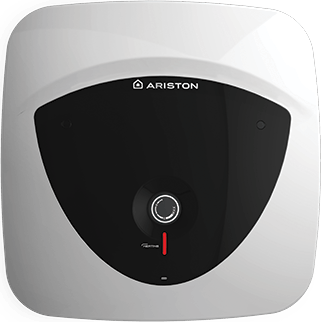
 www.ariston.com
We are going for one of these, my inlaws have one in their main house and are getting another for their town house...
Andris Lux - Compact Electric Storage Water Heater | Ariston
Andris lux is a high-quality performance range of Ariston electric storage water heaters. Available in under sink models and capacities of 10, 15 and 30 litres.

They all seem to be 1.5kW according to your link.It only 'stores' 10l of water so 1.5kW seems plenty to me. While I have the "Lord and Saviour of Geysers" here, should I plumb it in series with the existing 200l geyser?
They all seem to be 1.5kW according to your link.
IMHO, where you're going, you wont need geysers in series anymore. Remember, its all about the standing losses of 3kWh per day per geyser. Remove that and you have an extra 9kWh to play with.
Yes, different sizes and over or under counter, the rest is the same.
I'll be able to remove it from our smaller geyser by running the undercounter, there will still be losses but not as much and I can turn the undercounter off over night. Our bigger geyser will still be an issue in terms of losses, two boys to bath/shower and mylizardwife.

No, over 30kW.
I'm no expert but that sounds excessive:No, over 30kW.
Where they come in handy is extending your hot water. A 5.5kW increases your temp by about 10 degrees. So you wind up using less hot water from the geyser when showering. A 150 lire becomes a 175 litre or 200 litre for example.
I actually would be strongly considering a 5.5kW instant electric heater in series with the 2 geysers I would have with the geyser controller. Also with them being at 70 degrees by end of the day plus the 5.5kW instant heater, you would use little hot water from the geyser.

I thought you were talking about showering with an instant heater. My bad.I'm no expert but that sounds excessive:
View attachment 1918469
What are the chances of someone coming into the bathroom and using the sink while you're in the shower?
My coworker claims he has a 3.5kW he uses to shower, the whole family uses it. I dont know how true that is. They must be showering with a trickle.I'm no expert but that sounds excessive:
View attachment 1918469
What are the chances of someone coming into the bathroom and using the sink while you're in the shower?
I was, I asked AI how many kW for a decent shower, it said 9kW. So put a 9kW in each bathroom and spank anyone showering at the same time.I thought you were talking about showering with an instant heater. My bad.
Tap depending on flow rate can work. I think 2 litres per minute (low pressure) is about 3.5kW. 5.5 is a little more.
Let me ask my AI. Coz if you need 30kW with gas then why not the same with electric?I was, I asked AI how many kW for a decent shower, it said 9kW. So put a 9kW in each bathroom and spank anyone showering at the same time.
