-
- News
-
Categories
- 5G
- ADSL
- AI
- Banking
- Black Friday
- Broadband
- Broadcasting
- Business
- Business Telecoms
- Cellular
- Cloud and Hosting
- Columns
- Cryptocurrency
- Energy
- Enterprise
- Fibre
- Gadgets
- Gaming
- Government
- Hardware
- Industry News
- Internet
- Internet of Things
- Investing
- IT Services
- Motoring
- Reviews
- Science
- Security
- Smartphones
- Software
- Technology
- Telecoms
- Trending
- Wireless
- Press Office
- Forum
- Industry News
- What's Next
- Company hub
- Speed Test
- About us
- Advertise with us
- Contact
- Careers


-
Join the MyBroadband community
South Africa’s biggest forum. Discuss, discover, and connect with thousands of members.
-
Question of the Day: How much would you be willing to pay for a next-generation gaming console?

You are using an out of date browser. It may not display this or other websites correctly.
You should upgrade or use an alternative browser.
You should upgrade or use an alternative browser.
New The PC Build Thread
- Thread starter Vercogen
- Start date

Progenix Oj101
Dealer
Testing a post, because my reply is giving a "security error"
Progenix Oj101
Dealer
OK I'm going to split my replies:
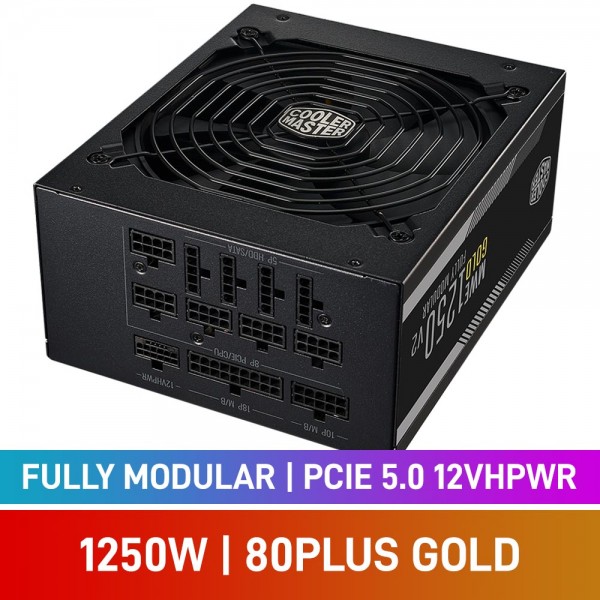
I'd go for a Corsair RMx Shift series if you can wait until the end of the month (only white 1,000w units are currently available), otherwise something like this:
 progenix.co.za
It looks alright, but something stands out immediately. Are you aware you chose a small form factor PSU? It'll FIT in an ATX case, but you won't be able to screw it in place - it's just going to dangle around. It's physically smaller than an ATX PSU.Hi All, I'm looking at building a workstation PC and would like some advice on a build. Been a while since I've built a PC and not sure about some of the new details that might maximize my performance. I'll be using it mostly for After Effects and Cinema 4D (VFX and 3D animation). The new Core Ultra 9 seems to be the top performer here. Ram should at a minimum be 96gb, but wondering if its worth going higher with 4 sticks? Not sure what case and PSU I should be looking at, but keep in mind that I'll be putting in a 5090 when that comes out. Below is my first stab at it, would appreciate some scrutiny.
View attachment 1771965
I'd go for a Corsair RMx Shift series if you can wait until the end of the month (only white 1,000w units are currently available), otherwise something like this:
Cooler Master MWE GOLD 1250 V2 80 PLUS Gold Fully Modular PCIe 5.0 12VHPWR ATX 3.0 PSU, Black, 1250w — Best Deals at Progenix — South Africa
Cooler Master took the initiative and continuously developing our first ATX3.0 Power Supply lineup. Compliant with ATX3.0 standard and 12VHPWR connectors, the MWE Gold 1050/1250 - V2 ATX3.0 can fully support the peak power drawn by the 40 series RTX graph
progenix.co.za
Progenix Oj101
Dealer
Hydronaut is my go-to, followed by MX-6 only if the Hydronaut isn't available.Looks solid so far. Make sure you get a decent AIO cooler like an Arctic III RGB with the new LGA1185 Contact Frame and decent paste like the Arctic MX 6.
Diminishing returns, though, especially given his use-case.The RAM - I'd recommend CL30 and the highest mHz you can afford. Kingston Royal / Trident RGB looks good to me.
That statement is the main reason I'm replying to this particular post. Efficiency says nothing about noise, ripple, droop, etc - it ONLY says something about efficiency targets. The difference between Gold and Platinum could be a dozen or two watts at full tilt - a 25w (or even 50w) difference at 1000w is basically margin of error.A Platinum rating PSU costs just a tiny bit more - go for that for the more stable ripple control.
In a similar way, looking at the efficiency of a car (l/100km) tells you nothing about acceleration, top speed, ride comfort, handling, and so on. It's entirely POSSIBLE to have an 80Plus Gold unit that has tighter voltage control than an 80Plus Titanium unit.
Fully agree here - for performance, some of the best are the 4000D/5000D/7000 Airflow, with the main difference between them being their physical size.Make sure you have enough case fans for the case - Excellent choice of case btw. The 5000D Airflow is one of the best imo.
I'd steer clear of lower-end Aorus boards. Gigabyte likes to make some rather major changes with newer revisions, and not for the better. Rev. 1 might be an 8-layer PCB while Rev 1.3 drops to 6 layers. This won't affect most users, but you're still not getting the product you saw reviewed/the product you paid for.Mainboard looks okay - Check if the Gigabyte Aorus or MSI Tomahawk is available since that has better VRM and build quality.
The Gaming X (and Eagle) are some of the best value for money boards around, and I don't believe in over-spending on a board. It's become very difficult to get a BAD board. The most important thing is making sure the board has the I/O you require, arguably followed by aesthetics.
Progenix Oj101
Dealer
I actually posted on Carbonite about the price trends of the 7800X3D using PC Part Picker this past Sunday:There are circumstances where the 7800X3D should be considered, but all on AM5, it will likely boil down to availability, but where the 9800X3D becomes scarce due to demand, the 7800X3D won't become any cheaper either. Not to ignore that the 7800X3D is also becoming limited in availability. AM4 is still capable.
https://pcpartpicker.com/product/3hyH99/amd-ryzen-7-7800x3d-42-ghz-8-core-processor-100-100000910wof
In August, you could grab one for $366, with a mean price of $387 and median price of $383. Now, the cheapest is $429 with highs near the $600 mark, and a mean of $493 / median of $478. That represents an increase of 17% for the lowest price, 27% for the mean price, and 25% for the median.
The biggest shocker is the maximum price in August was $417, which is cheaper than the current lowest price.
Locally, they were R 7,200 at this time last year, R 8,300 by March this year, R 8,500 by September and R 9k+ now.
Last week I asked the disti if a better price could be given if I took 10-20. The reply I got was that I'm full of jokes thinking I can get that sort of allocation, and as new stock landed at a higher price they're eating margin to keep the price the same. This means that even if there was that sort of allocation available, there isn't room for volume discounts.
Progenix Oj101
Dealer
I possibly have the largest DFI collection in SA, sitting at 13 boards spanning Socket A, Socket 754, Socket 939 and AM2. I was a massive DFI fanboy back in the day, and all of my top OC results (phase change, dry ice, liquid nitrogen) were done using DFI.Yeah, early 2010's. DFI was the Noctua of motherboard OEM's (pricey) like EVGA. There used to be tons more OEM's in the 2000's before the market consolidated - Shuttle, PC Chips, ECS, Abit. More companies seemed to be able to sell budget boards and stay in business.
As a massive DFI fanboy, I'll tell you this: It's a love HATE relationship. The public were basically DFI's beta testers. Those boards were unstable, unpredictable, and unhinged.
One day you're running an FX-55 at 3.15GHz 24/7 stable, a few months later you even can't get into Windows above 2.9GHz. That evening you'll be completely stable at 3.18GHz, your highest yet. Tomorrow, it no longer POSTs with the RAM you're using, but just for 2-3 restarts before being back to normal. A week later it's dead, nothing will revive it. You can't even get a POST error out of it. Reset the BIOS by leaving the battery out? That should be reset in less than 30 seconds, but it's still dead. Leave the battery out for a week with the board in a drawer and suddenly it's working perfectly again.
I think I (and most other users) would have loved them a lot less if it weren't for DFI-Street (later DIY-Street) and, specifically, Oscar Wu.

ninjaman509
Senior Member
Would the Gigabyte Aorus Ultra B650i be considered a lower end or does Ultra mean its a high end Aorus board?I'd steer clear of lower-end Aorus boards. Gigabyte likes to make some rather major changes with newer revisions, and not for the better. Rev. 1 might be an 8-layer PCB while Rev 1.3 drops to 6 layers. This won't affect most users, but you're still not getting the product you saw reviewed/the product you paid for.
I haven't upgraded motherboard in over 7 years so out of touch with all the naming schemes sorry if obvious question
Progenix Oj101
Dealer
The Elite and Pro are the low ends.Would the Gigabyte Aorus Ultra B650i be considered a lower end or does Ultra mean its a high end Aorus board?
I haven't upgraded motherboard in over 7 years so out of touch with all the naming schemes sorry if obvious question
Gigabyte's naming makes absolutely no sense. None whatsoever. None sense. Nonsense.
Can you be better than a Master? Yeah, an Xtreme. Pro? That's gotta be better than Ultra, sounds wanna-be high end, but it's not. Elite? Surely you're in the upper ranks, but it's at the bottom, below Pro. I've been dealing with this naming for years and I STILL don't know what goes where off the top of my head other than Elite is at the bottom and Xtreme is at the top.
Elite at the bottom... Does that make it a power bottom? Eish.

ninjaman509
Senior Member
Haha fair enough, but B650i Aorus Ultra = Good ITX option for the money and spec?The Elite and Pro are the low ends.
Gigabyte's naming makes absolutely no sense. None whatsoever. None sense. Nonsense.
Can you be better than a Master? Yeah, an Xtreme. Pro? That's gotta be better than Ultra, sounds wanna-be high end, but it's not. Elite? Surely you're in the upper ranks, but it's at the bottom, below Pro. I've been dealing with this naming for years and I STILL don't know what goes where off the top of my head other than Elite is at the bottom and Xtreme is at the top.
Elite at the bottom... Does that make it a power bottom? Eish.

crysis
Expert Member
Thanks for the feedback. Here's a question that's stumping me. Do I want/need 12VHPWR or that new 6+6 connector? What's the deal there? I mean, the sense wires seem pretty nifty, but then a lot of high end PSU's don't even come with it, such as the RMx Shift.OK I'm going to split my replies:
It looks alright, but something stands out immediately. Are you aware you chose a small form factor PSU? It'll FIT in an ATX case, but you won't be able to screw it in place - it's just going to dangle around. It's physically smaller than an ATX PSU.
I'd go for a Corsair RMx Shift series if you can wait until the end of the month (only white 1,000w units are currently available), otherwise something like this:
Cooler Master MWE GOLD 1250 V2 80 PLUS Gold Fully Modular PCIe 5.0 12VHPWR ATX 3.0 PSU, Black, 1250w — Best Deals at Progenix — South Africa
Cooler Master took the initiative and continuously developing our first ATX3.0 Power Supply lineup. Compliant with ATX3.0 standard and 12VHPWR connectors, the MWE Gold 1050/1250 - V2 ATX3.0 can fully support the peak power drawn by the 40 series RTX graph
Gtx Gaming
Gtx Gaming
Allocations number are in from the main AMD distro, around 120 9800x3d cpu's for the country landing next week.

Neoprod
Honorary Master
I'd steer clear of lower-end Aorus boards. Gigabyte likes to make some rather major changes with newer revisions, and not for the better. Rev. 1 might be an 8-layer PCB while Rev 1.3 drops to 6 layers. This won't affect most users, but you're still not getting the product you saw reviewed/the product you paid for.
The Gaming X (and Eagle) are some of the best value for money boards around, and I don't believe in over-spending on a board. It's become very difficult to get a BAD board. The most important thing is making sure the board has the I/O you require, arguably followed by aesthetics.
Yes - Rev 1.3 of the B650M Aorus Elite AX and B650M Aorus Elite have fewer PCB layers than rev 1.0-1.2.
I don't think it matters except for someone wanting to get into memory overclocking but those boards aren't rated for much higher than DDR5-6600 anyway.

longboy
Honorary Master
- Joined
- May 11, 2009
- Messages
- 22,292
- Reaction score
- 19,288
Testing a post, because my reply is giving a "security error"
I used to get that too posting from Tails OS over Tor.
MyBB software base doesn't like strange things it seems lol.
longboy
Honorary Master
- Joined
- May 11, 2009
- Messages
- 22,292
- Reaction score
- 19,288
Thanks for the feedback. Here's a question that's stumping me. Do I want/need 12VHPWR or that new 6+6 connector? What's the deal there? I mean, the sense wires seem pretty nifty, but then a lot of high end PSU's don't even come with it, such as the RMx Shift.
Most if not all newer Modular Platinum rated -> PSU's have 2 x dedicated slots for 12V power rails and a newer 12vHPWR rail. This is what I use - the 10 year Warranty is nice too. It came standard with the 12vHPWR connector.
It will last at least 5 years before I see any need to upgrade. I got this for R2 299 when it was on sale.

Super Flower SF-1000F14XG ATX 3.0 Leadex VII XG 1000W Cybenetics Platinum ATX 3.0 Fully Modular Black Desktop Power Supply
Buy Super Flower SF-1000F14XG ATX 3.0 Leadex VII XG 1000W Cybenetics Platinum ATX 3.0 Fully Modular Black Desktop Power Supply at Wootware with fast shipping & superb service.
 www.wootware.co.za
Last edited:
longboy
Honorary Master
- Joined
- May 11, 2009
- Messages
- 22,292
- Reaction score
- 19,288
Hydronaut is my go-to, followed by MX-6 only if the Hydronaut isn't available.
Diminishing returns, though, especially given his use-case.
That statement is the main reason I'm replying to this particular post. Efficiency says nothing about noise, ripple, droop, etc - it ONLY says something about efficiency targets. The difference between Gold and Platinum could be a dozen or two watts at full tilt - a 25w (or even 50w) difference at 1000w is basically margin of error.
In a similar way, looking at the efficiency of a car (l/100km) tells you nothing about acceleration, top speed, ride comfort, handling, and so on. It's entirely POSSIBLE to have an 80Plus Gold unit that has tighter voltage control than an 80Plus Titanium unit.
Fully agree here - for performance, some of the best are the 4000D/5000D/7000 Airflow, with the main difference between them being their physical size.
I'd steer clear of lower-end Aorus boards. Gigabyte likes to make some rather major changes with newer revisions, and not for the better. Rev. 1 might be an 8-layer PCB while Rev 1.3 drops to 6 layers. This won't affect most users, but you're still not getting the product you saw reviewed/the product you paid for.
The Gaming X (and Eagle) are some of the best value for money boards around, and I don't believe in over-spending on a board. It's become very difficult to get a BAD board. The most important thing is making sure the board has the I/O you require, arguably followed by aesthetics.
Noted. This is actually valuable information.
Thank you.
Progenix Oj101
Dealer
That's my go-to AM5 ATX board.Just get the B650 Gaming X AX and be happy. It's rock solid and it looks good.
Yes, there aren't many ITX options, and it's certainly one of the better.Haha fair enough, but B650i Aorus Ultra = Good ITX option for the money and spec?
12V-2x6 is the far better connector, and replaces 12VHPWR. It has far less chance of poor contact.Thanks for the feedback. Here's a question that's stumping me. Do I want/need 12VHPWR or that new 6+6 connector? What's the deal there? I mean, the sense wires seem pretty nifty, but then a lot of high end PSU's don't even come with it, such as the RMx Shift.
The problem is PCB layers is the most spoken-about/well-known change. What else changes? They mention if the LAN/Wi-Fi controller changes, but at a deeper level, what else makes it a better or worse board? Nobody knows. You're not getting what you paid for, though.Yes - Rev 1.3 of the B650M Aorus Elite AX and B650M Aorus Elite have fewer PCB layers than rev 1.0-1.2.
I don't think it matters except for someone wanting to get into memory overclocking but those boards aren't rated for much higher than DDR5-6600 anyway.
longboy
Honorary Master
- Joined
- May 11, 2009
- Messages
- 22,292
- Reaction score
- 19,288
That's my go-to AM5 ATX board.
Yes, there aren't many ITX options, and it's certainly one of the better.
12V-2x6 is the far better connector, and replaces 12VHPWR. It has far less chance of poor contact.
The problem is PCB layers is the most spoken-about/well-known change. What else changes? They mention if the LAN/Wi-Fi controller changes, but at a deeper level, what else makes it a better or worse board? Nobody knows. You're not getting what you paid for, though.
Another quick Q -
Is the Deepcool AK620 Digital air cooler enough for a 9800x3D or should I go AIO?
This is my Build atm:
PC Builder - Wootware
Use the PC Builder to build your new epic computer for gaming, office, or personal use. Easily choose components for each hardware category and assist with compatibility. Woot up your life using the Wootware PC Builder today.
Last edited:
Progenix Oj101
Dealer
Deepcool. I'm not a fan of AIOs.Another quick Q -
Is the Deepcool AK620 Digital air cooler enough for a 9800x3D or should I go AIO?
AIO coolers can be nice - they look great. However, they have one massive problem, and that's reliability. If a fan fails on an air cooler (which is incredibly unlikely), chances are you won't even notice as the airflow in the case is sufficient. A cooler like that Deepcool has a 2nd fan anyway.
When you do notice, simply swap out with another 120mm fan and you're A for away. With an AIO, if the pump fails, you won't even manage to boot into Windows before hitting thermal shutdown. You're 100% out of action until the cooler can be RMA'd or a new one purchased.
Air coolers can offer similar or better performance when compared to an average AIO (I'm not talking about the Liquid Freezer III, I'm talking about your typical Cooler Master/Antec/whatever 240-360mm AIO) for a fraction of the cost.
Fully agree with this one.Deepcool. I'm not a fan of AIOs.
AIO coolers can be nice - they look great. However, they have one massive problem, and that's reliability. If a fan fails on an air cooler (which is incredibly unlikely), chances are you won't even notice as the airflow in the case is sufficient. A cooler like that Deepcool has a 2nd fan anyway.
When you do notice, simply swap out with another 120mm fan and you're A for away. With an AIO, if the pump fails, you won't even manage to boot into Windows before hitting thermal shutdown. You're 100% out of action until the cooler can be RMA'd or a new one purchased.
Air coolers can offer similar or better performance when compared to an average AIO (I'm not talking about the Liquid Freezer III, I'm talking about your typical Cooler Master/Antec/whatever 240-360mm AIO) for a fraction of the cost.
I run an AK620 on a 7800X3D and have no thermal issues so I think the 9800X3D should be fine as well. However in some reviews it seems it does run hotter.