The Local & Global Car Defect & Recall Thread

Maruti Suzuki to recall Ertiga, Ciaz & XL6 mild-hybrid variants - Team-BHP

752574

Maruti Suzuki is going to undertake a massive safety recall of almost 60,000 units of the mild-hybrid versions of the Ertiga, Ciaz and XL6.

It is believed that Maruti is recalling these cars due to a safety risk related to the ISG system.

Dealers have been asked to put on hold all current stocks and factory dispatches have also been halted. Owners of the affected cars are expected to be given loaner cars while their cars are being fixed.

Maruti Suzuki is expected to make an official announcement regarding this recall tomorrow.

 
Volvo Recalls Cars Whose Doors Could Open Unexpectedly - CR
Almost 145,000 Volvo S60 and V60 vehicles are involved

757426

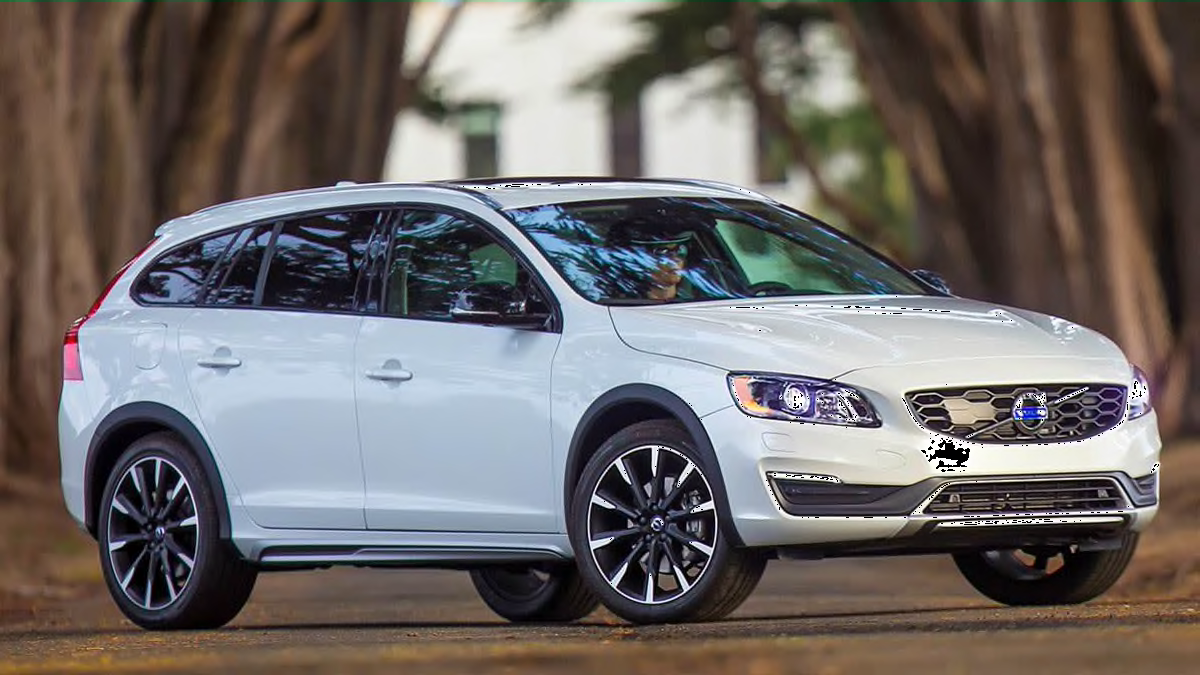
Volvo is recalling 144,937 S60 sedans and V60 wagons from the 2011 through 2017 model years because their doors may open unexpectedly while the car is in motion.

Doors may suddenly open during sharp turns or on roundabouts even if they appear to be tightly closed, says the National Highway Traffic Safety Administration (NHTSA).

The problem is due to faulty parts within the door latch mechanism that are more likely to fail in extremely hot weather. NHTSA opened the investigation that led to the recall after receiving complaints from owners.

Owners of affected vehicles will be contacted by Jan. 24, 2020, and instructed to bring their cars to Volvo dealers, who will replace all four door latches free of charge.

The Details

Vehicles recalled:
Certain Volvo S60, S60 Inscription, and S60 Cross Country sedans and V60 and V60 Cross Country wagons manufactured from June 2, 2010, through Dec. 31, 2016.

The problem: In extremely hot climates, a faulty door latch may break while the door is being opened or closed. Although the door may appear to be closed, it could still open while driving.

The fix: Volvo will install redesigned door latches for all four doors of the affected vehicles.

How to contact the manufacturer: Volvo will contact owners by Jan. 24, 2020. Owners can also call Volvo at 800-458-1552. Volvo's number for this recall is R89978.

NHTSA campaign number: 19V849

 
BMW issues stop-sale on M5, M8, X5 M and X6 M - autoblog
Sold cars are also recalled for transmission issue

757428

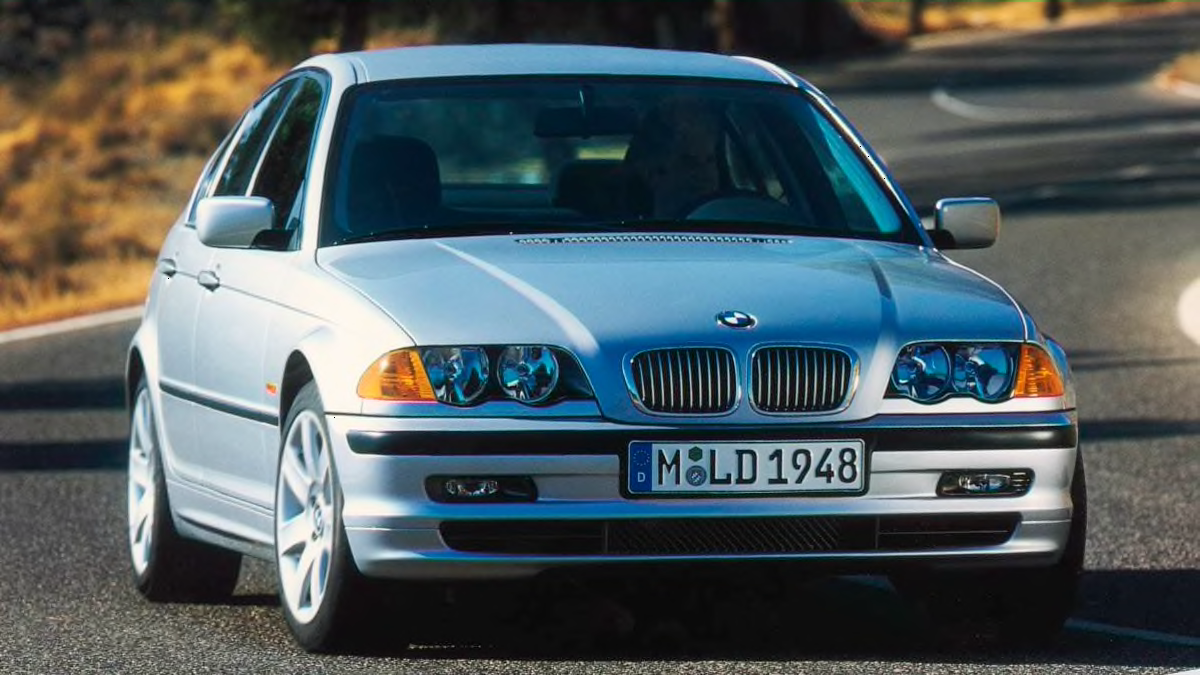
BMW has issued a stop-sale on certain M models in its lineup due to a transmission wiring harness problem. These cars include the M5, M8 (Coupe, Convertible and Gran Coupe), X5 M and X6 M. The issue was originally seen posted on Bimmerpost forums and initially reported by Motor1.

All the models being recalled are M cars fitted with their respective versions of BMW’s 4.4-liter twin-turbo V8 and eight-speed automatic transmission.

According to documents posted on Bimmerpost (below), the transmission wiring harness could become damaged due to its location and routing. This could lead to a short circuit and cause a transmission problem.

The document continues by saying that it could cause the vehicle to lose propulsion and shift into neutral while driving.

757430

The vehicles affected were all built in 2019 between January 30 and November 27. That encompasses nearly every M car built this year, so you’ll be hard pressed to find one available for sale at BMW dealers today. I

n all likelihood, it will be completely impossible to drive one of these home right now unless you get extremely lucky.

We’ve reached out to BMW to see if it could provide any more details about the stop-sale. As of now, there’s no official recall posting on the National Highway Traffic Safety Administration’s website, but that will likely change soon.

For those who own one of these M cars already built in that time-frame, expect a recall notice in the mail soon. BMW will replace the transmission wiring harness on all the cars being recalled.

If you were looking to buy one of these super-fast M cars, you’re going to have to wait until BMW is able to fix all the vehicles on dealer lots.

We’ll update this story with any dates or information BMW is able to provide us when we hear back.

 
GM Recalls 700,000+ Silverado, Sierra Pickups for Stalling, Fires, Disabled ABS - Car and Driver

759002

General Motors is recalling more than 700,000 pickup trucks in the U.S. for software errors that can disable critical safety functions and, separately, for glue on battery cables that can cause fires, according to filings with the National Highway Traffic Safety Administration (NHTSA).

On 2019 Chevrolet Silverado 1500 and GMC Sierra 1500 models, a fault in a brake ECU can disable both the anti-lock brakes and the stability control without warning, and without any warning light or message to indicate that these systems are completely off.

Fewer than 1,000 Cadillac CT6 sedans from the 2019 model year with the four-cylinder and V-8 engines are also included.

A total of 463,995 vehicles are affected.

GM said it discovered the issue from the brake ECU's supplier, ZF TRW, last month. Dealers will update the software starting in late January.

Another 350,371 Silverado 1500 and Sierra 1500 trucks from both 2019 and 2020 may have excess glue on the positive terminals connecting the alternator to the main battery.

This glue can cause an "intermittent electrical connection" that may lead to warnings on the instrument panel that say "Service Battery" or "Battery Saver."

The poor connection can also cause a heat buildup that can soften the bolt attaching the terminal and unthread it, causing a stall. Or an electrical arc might occur and melt other parts in the engine bay and start a fire.

GM's Canadian division first reported the issue in August after a 2019 Sierra 1500 stalled due to a missing nut.

Dealers will inspect for any excess glue and replace any damaged components starting in late January.

There have been no reports of accidents or injuries related to these defects.

Due to the overlap in production dates cited in these two recalls, it is highly likely that some of the 2019 trucks—by our estimate, more than 90,000—have both defects instead of just one.

Our estimated total above reduces the potential double-counting of the total affected trucks.

 
Mazda recalls 2019-2020 Mazda3 for errant activation of emergency braking system - Autoblog

It could make an emergency stop when there's no need to

759328

The newly redesigned Mazda3 has been subject to numerous recalls since it went on sale for the 2019 model year. Today brings news of another such occurrence, as Mazda recalls 35,390 2019-2020 Mazda3s (sedans and hatchbacks).

This recall is related to the automatic emergency braking system equipped to certain models.

According to Mazda, affected vehicles may “unexpectedly stop while driving due to inadvertent activation of the Smart Braking System automatic emergency braking system.”

The programming of the system’s software could cause the Mazda3 to “falsely detect an obstacle in front of the vehicle while driving.” In response to that detection, the software may automatically apply the brakes despite no collision being imminent.

We don’t have to explain how dangerous that could end up being for the driver and those around them. Your car slamming on the brakes for no reason could easily be the cause of an accident.

As of now, Mazda says no injuries or deaths have been reported as a result of the defect.

In case you haven’t experienced the system in your Mazda3 yet, there is something to look out for. Mazda says a warning alarm will sound and a warning message will appear in the instrument cluster and head-up display when the car is about to perform an emergency stop.

Mazda said that it’s reported the defect to the NHTSA, but it hasn’t been posted on the website yet. The fix is easy for some, but more difficult for others.

Vehicles with early build dates will need the whole instrument cluster replaced or reprogrammed, as these cars have a different procedure for "temporary manual deactivation of the Smart Braking System."

These early build cars will also receive a new owner's manual to reflect the revised procedure of temporary manual deactivation of the system.

Later cars will only need the Smart Braking System software reprogrammed with an improved version.

Mailings to owners for notification purposes should be completed on or before February 17 next year.

 
Mercedes-Benz recalls 750,000 cars for sunroofs that can fly off - Autoblog

The recall covers C-Class, E-Class, CLK-Class and CLS-Class models made between 2001 and 2011

762766

Mercedes-Benz is recalling nearly 750,000 cars because the vehicles’ sunroofs could potentially detach and fly off, causing road hazards.

A full list of affected models can be found here in PDF form.

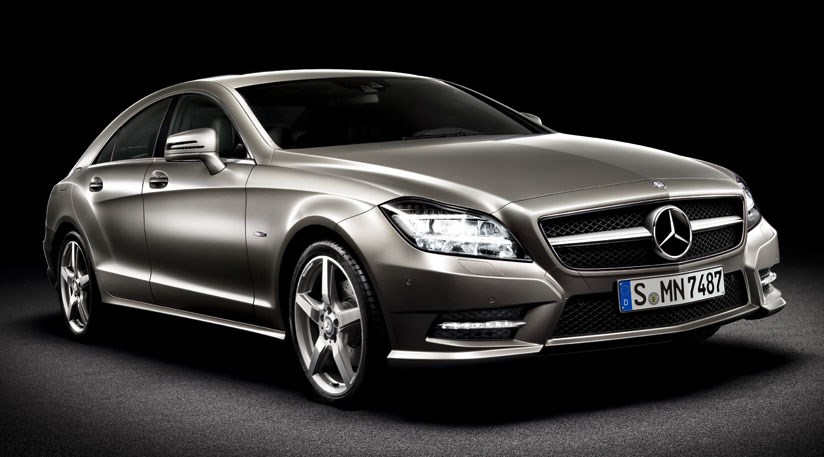
The cars include the Mercedes-Benz’s C-Class, E-Class, CLK-Class and the CLS-Class, made between 2001 and 2011.

All four vehicles came with an optional sunroof, and the bonding material on those sunroofs can deteriorate, resulting in the sunroof detaching from the car, according to the National Highway Traffic Safety Administration.

Affected owners will be contacted by Mercedes on or after February 14, and the sunroofs will be inspected and replaced if necessary, free of charge.

Owners can also contact MBUSA customer service at 1-800-367-6372 for more information.

 
Mercedes-Benz USA Recalls 750,000 Cars For Sunroofs That May Fly Off

Mercedes-Benz is recalling around 750,000 cars in the USA because the vehicles’ sunroofs could potentially detach and fly off, causing road hazards.

The cars include the C-Class, E-Class, CLK-Class and the CLS-Class, made between 2001 and 2011. All four vehicles came with an optional sunroof, and the bonding material on those sunroofs can deteriorate, resulting in the sunroof detaching from the car, according to the National Highway Traffic Safety Administration.

Affected owners will be contacted by Mercedes on or after February 14, and the sunroofs will be inspected and replaced if necessary, free of charge.

 
Subaru Recalls Nearly 500,000 Vehicles to Replace Defective Airbags Again - Consumer Reports
Affected vehicles may now have their temporary airbag inflator replacements swapped out for permanent ones

764060

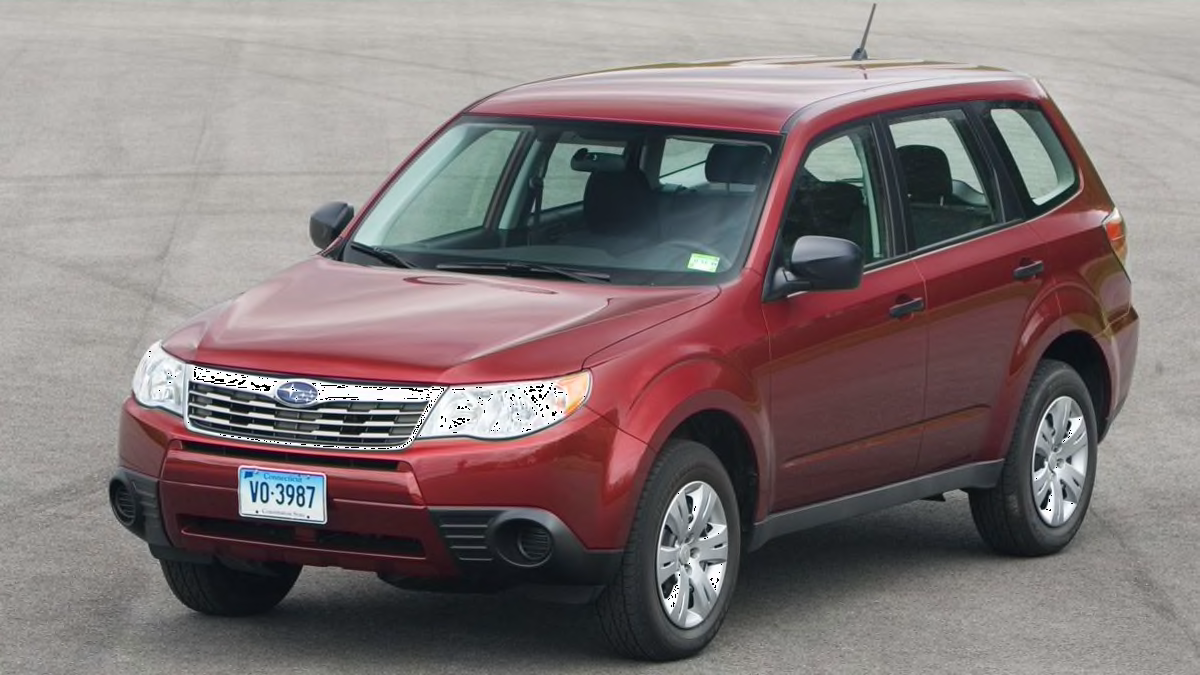
Subaru is recalling 497,922 vehicles to replace front passenger airbag inflators. These same vehicles were part of a recall in which defective Takata airbag inflators received temporary replacements until permanent ones were available.

The recalled airbag inflators may explode if a propellant they contain degrades after long-term exposure to high humidity or extreme temperatures, according to documents released by the National Highway Traffic Safety Administration.

Subaru said there have been no crashes or deaths related to the issue.

Subaru already has begun notifying owners of affected Subaru vehicles, and General Motors has begun notifying owners of affected Saab vehicles that are based on the Subaru Impreza.

GM did not immediately respond to Consumer Reports’ requests for comment.

 
Toyota is recalling nearly 700,000 vehicles because of issues with the fuel pumps - CNN Business

If you drive a Toyota, you might want to read on.

Toyota is recalling nearly 700,000 Toyota and Lexus vehicles in the US because of issues with the fuel pumps. The pumps can stop operating, the company said, leading to engine failure.

"If a vehicle stall occurs while driving at higher speeds, this could increase the risk of a crash," the company said.

Toyota says it's investigating the issue. When it comes up with a solution, it'll notify owners by mail by mid-March.

The vehicles under the recall are:

2018-2019 Model Year Lexus LS 500, LC 500, RC 350, RC 300, GS 350, IS 300, ES 350, LX 570, GX 460, and RX 350

certain 2019 Model Year Lexus NX 300, RX 350L, and GS 300

certain 2018-2019 Model Year Toyota 4Runner, Camry, Highlander, Land Cruiser, Sequoia, Sienna, Tacoma, and Tundra

certain 2019 Model Year Toyota Avalon and Corolla

 
BMW Recalls Over 350,000 Cars and SUVs to Replace Faulty Airbags Again - Consumer Reports
Most of these vehicles have already had a temporary fix performed

769654

BMW is recalling nearly 357,000 cars and SUVs as part of ongoing efforts to repair faulty Takata airbags that could explode and injure or kill vehicle occupants.

Three related recalls include a wide variety of vehicles from the 2000 through 2013 model years, including X1, X3, X5, and X6 SUVs, and 1 Series and 3 Series sedans, wagons, coupes, and convertibles.

These same vehicles were part of a previous recall in which defective Takata airbag inflators were temporarily replaced until permanent ones became available.

Those permanent replacements are now ready; vehicle owners will need to have them installed even if they already had the interim repair performed.

The National Highway Traffic Safety Administration has called the ongoing recall of airbags made by the major automotive parts supplier Takata "the largest and most complex safety recall in U.S. history."

Over 41.6 million vehicles have been recalled because of the faulty airbags, which have been associated with 16 deaths in the U.S. and at least 24 deaths and 300 injuries worldwide.

Details of the various BMW models affected are included in the article link below:

 
Nissan had to do it twice, because with the first recall they replaced the Takata airbags with... you guessed it... Takata.

Thankfully I never had a car with Takata.
 
Toyota announces global recall over non-deploying airbags

Toyota announced on Tuesday that it will recall 3.4 million vehicles worldwide because of an electronic defect that could result in airbags not deploying in crashes.

The recall, which includes 2.9 million US vehicles, covers 2011-2019 Corolla, 2011-2013 Matrix, 2012-2018 Avalon and 2013-2018 Avalon Hybrid vehicles, and is tied to a report of one fatal crash. We are currently awaiting feedback on whether any South African vehicles are involved.

 
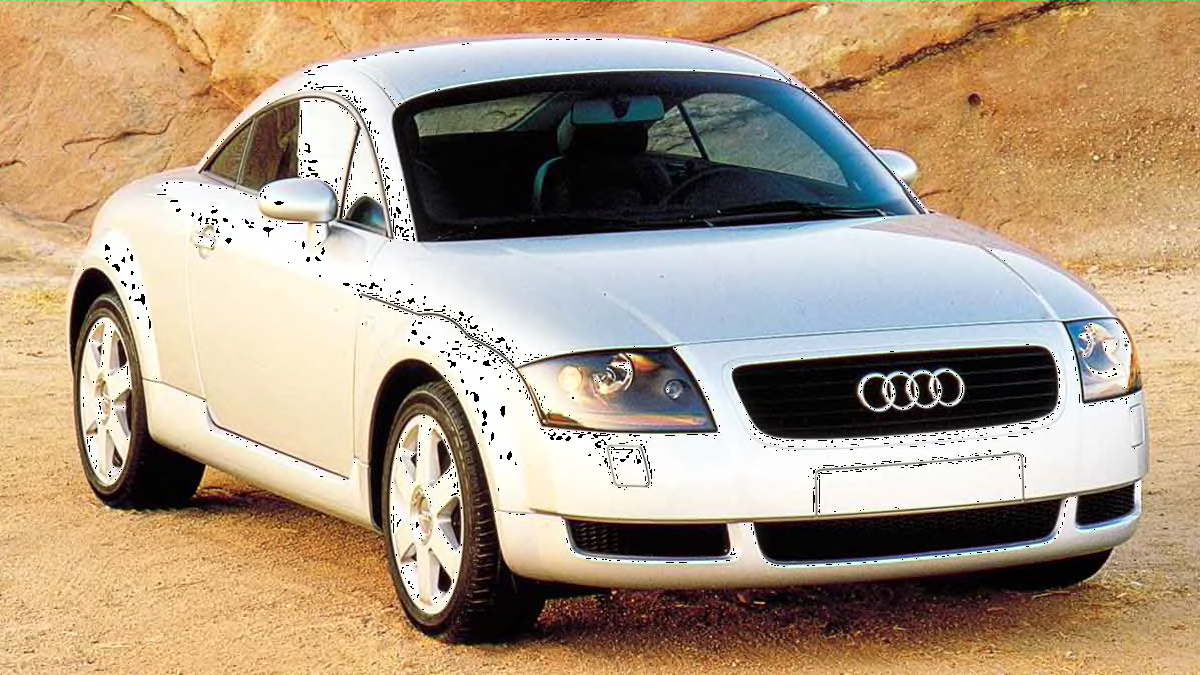
Older Audis Recalled for Dangerous Takata Airbags - Consumer Reports
106,000 Audi A4, A6, A8, and TT models are included

1581018850817.png

Approximately 106,000 Audi A4, A6, and A8 sedans and Audi TT coupes and convertibles from the 1998 through 2001 model years have been recalled to replace dangerous Takata driver’s-side airbags that can cause serious or fatal injuries to vehicle occupants.

According to the National Highway Traffic Safety Administration, these airbags may allow too much moisture in, which could cause the airbags to deploy without enough force or with too much force to protect occupants in a crash. Both situations could cause serious injuries and death.

The Takata airbags in this recall are of a different design from those included in a larger recall of Takata airbags made between 2002 and 2015.

The airbags in these Audis have what are called non-azide driver frontal airbag inflators (NADI). They were produced until Aug. 21, 1999.

NHTSA also says the inflators used in the recalled Audi vehicles are of a different type from those installed in recently recalled vehicles from Acura, BMW, Honda, Isuzu, Mitsubishi, and Toyota, and it “does not have any indication of inflator ruptures in the field or in test environments” for the NADI inflators used specifically in Audi vehicles.

BMW has already issued a recall for certain older vehicles with NADI inflators, including some that should not be driven.

Acura, Honda, Isuzu, Mitsubishi, and Toyota have also issued recalls for vehicles with these inflators.

In a written statement, NHTSA said that Audi is unable to trace cars with the problem part, so the automaker is recalling all vehicles that may have had these faulty inflators installed.

Dealers will check the recalled cars to determine whether they need their driver’s-side airbag inflators replaced.

Replacement parts are not immediately available, according to NHTSA. The agency says it is unclear when owners will be able to get their vehicles repaired.

 
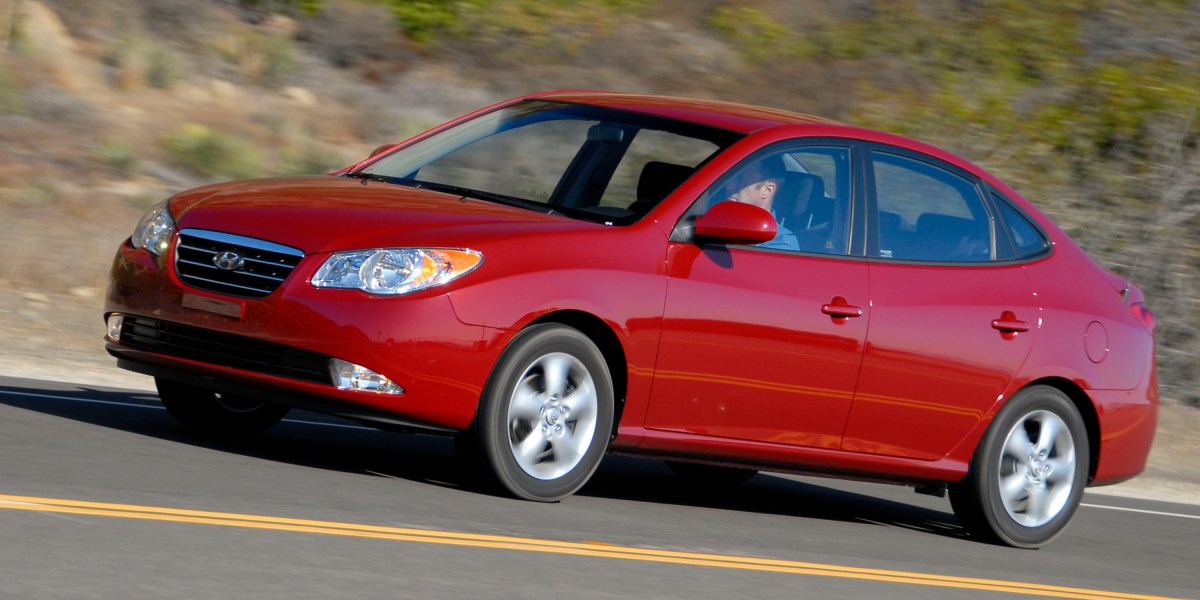
Hyundai recalls over 400,000 cars for issue that could cause engine fires - Fortune

1581244399170.png

Hyundai is recalling nearly 430,000 small cars because water can get into the antilock brake computer, cause an electrical short and possibly an engine fire.

The recall is another in a series of problems that the South Korean automaker and its related company Kia have had with engine fires during the past few years.

Past problems have triggered an investigation by the U.S. National Highway Traffic Safety Administration.

The latest recall covers certain 2006 through 2011 Elantra and 2007 through 2011 Elantra Touring vehicles.

The company says the electrical short can cause a fire even when the cars are turned off. But Hyundai said Friday that the rate of fires is so low that it's not necessary to park the cars outside.

Hyundai said in documents filed with the U.S. government that it has three reports of fires and no related injuries.

Dealers will install a relay in the cars' main electrical junction box to prevent short circuits while the car is turned off. The recall is to start on April 3.

 
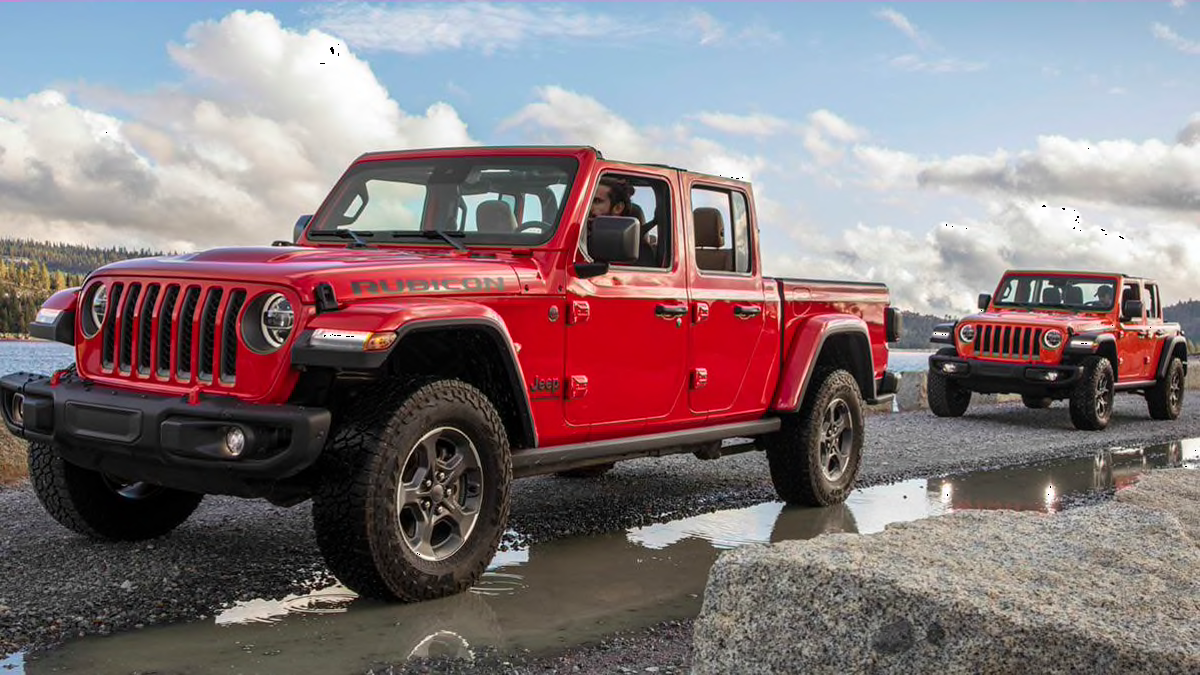
Jeep Wranglers and Gladiators Recalled for Fire Risk - Consumer Reports
A clutch pressure plate may fracture in vehicles with a manual transmission

1583997595326.png

Jeep is recalling certain 2018-2020 Jeep Wrangler SUVs and 2020 Jeep Gladiator pickup trucks equipped with manual transmissions because they may overheat and pose an increased fire risk.

The concern is that the clutch pressure plate (the mechanism that transfers engine torque to the transmission) may overheat due to friction and cause the transmission case to crack.

If the case fractures, there's a risk that heated debris could contact ignition sources on the vehicle and start a fire. And a damaged pressure plate could lead to a loss of propulsion and create road debris.

The driver may smell a burnt clutch or the clutch pedal may move farther than usual before the pressure plate breaks.

Fiat Chrysler Automobiles, which owns the Jeep brand, is still developing a repair procedure, but documents from the National Highway Traffic Safety Administration show that the fix will include a new pressure plate.

Owners will be notified about the recall in late April.

Read the full details at the link below.

 
Do we have a place to type in a vin number locally and see if a x vehicle is affected?
Asking as I literally don't know if it's been fixed or not.
 
Top
Sign up to the MyBroadband newsletter
X