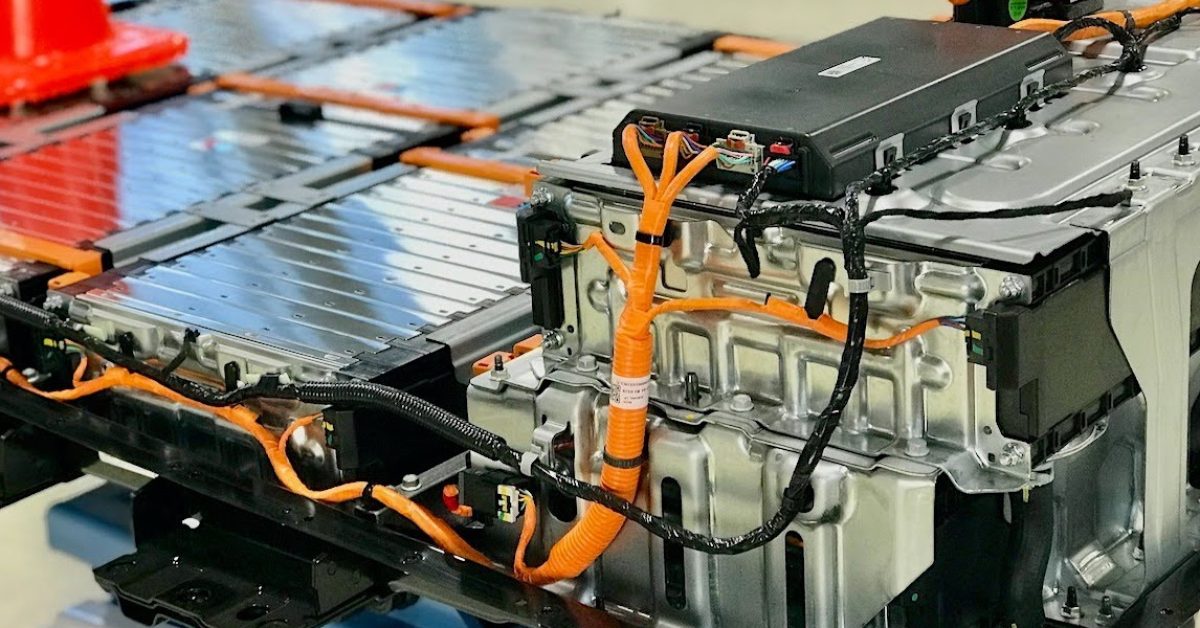
Hopefully writing the final chapter in the battery-related Bolt Fire saga, GM is set to start replacing all modules in some Chevy Bolt EV Batteries within weeks.
Electrek had an exclusive sit-down with a spokesperson from GM to get some details on the upcoming program.
For those just tuning in, this is the result of
more than a dozen battery-related Chevy Bolt fires in a little more than a year, and four in July of this year alone.
Last year in November,
GM issued the first recall notice, telling owners to only charge their vehicles to 90%, and provided a software update shortly after that enforced that restriction.
For many months things were quiet until late April when
the “final” software update fix was announced, followed quickly by
another fire. This software update was supposed to identify the conditions that could lead to a fire and provide sufficient notice to have the modules replaced before a fire could occur.
However, after
two fires in early July GM admitted that their software fix did not work, and proceeded to initiate a second recall. This one told owners to
not park indoors, and not charge unattended.
Then on July 25th another two fires occurred. GM is still investigating these and has declined to comment at this time.
Bad year for LG and GM
This has not been a good PR year for GM or LG, who provides the batteries for the Chevy Bolt. While GM has been
pushing towards an all-electric future, the Bolt owners who have been supporting GM on this journey have felt left out with no information while more fires have been reported.
Some have received buy-backs or replacement Bolts, while
some fire victims are still making car payments.
GM announced that there were not one, but
two “
rare manufacturing defects” found during LG’s manufacturing of the Bolt cells. It’s hard to see how this
couldn’t be a systemic problem with LG batteries, or at least terrible quality control on LG’s part.
Finally some good news
Regardless, we have some good news today. A spokesperson from GM has told us that they have informed some owners that, starting on August 23rd, they can start booking appointments to have
all of the modules in their batteries replaced
with new ones, and giving a new 8 year 100,000 mile warranty.
While this isn’t
exactly the same as a full-battery replacement, it’s the next best thing. This is what the owners have been asking for for a very long time. There’s a big caveat in this announcement, which I’ll get to below.
Priority for full-module replacements will go to:
- Owners with Bolts produced during a time period where GM suspects the battery manufacturing defects were present, and
- Owners who habitually do deep discharges, and where GM has OnStar telemetry data proving such
This is where GM has identified that the the risk is highest. Presumably priority will continue for the rest of the 2019 model year with South Korean manufactured batteries as module replacements are available, then spread to the 2017 and 2018 model years. The speed of this will depend on availability of modules.
It’s interesting that this matches up with our
investigations and the list of all known Bolt fires. It’s clear that the bulk of fires are in 2019 model year Bolts produced during October and November of 2018 – which appear to be
significantly more likely to catch fire than a 2019 gas car.
We also found the same charging pattern – most of the fires were from owners who let the state of charge run low before doing a charge up to full.
The GM spokesperson was not aware of the time period for the criteria, but it’s likely to be the same one that we found.
When asked why the change of heart, the GM spokesperson mentioned that they are taking this action out of an abundance of caution in order to ensure that all defective modules are replaced. These modules will be sent back to GM and LG for a forensic analysis.
GM will try to find the defects and figure out if an in-situ detection method can be devised. They hope that they will be able to find a pattern or come up with a reliable detection mechanism.
The big caveat is that if they are able to detect all modules that are defective, then only those modules will be replaced going forwards.


 www.autoblog.com