The Local & Global Car Defect & Recall Thread

NEARLY 750,000 GM TRUCKS AND SUVS COULD BE RECALLED DUE TO DODGY AIRBAGS - DRIVETRIBE​

1618544700995.png

The National Highway Traffic Safety Administration (NHTSA) has started to look into a potential issue involving nearly three-quarter of a million GM trucks and SUVs after six crashes occurred in which the driver’s airbag didn’t deploy.

According to the NHTSA, the problem is said to be related to a malfunction indicator and could affect 2020 and 2021 model year Chevy Suburbans, Silverados, Tahoes, GMC Sierras, Yukons, Cadillac Escalades, CT4s, CT5s, and XT4s.

NHTSA said in a post on Friday that so far eight injuries have been linked to this issue, which is why alarm bells have been raised. The total number of vehicles said to be affected is estimated to be 749,312 vehicles, according to the notice.

If this is the case, and GM has sold cars with potentially faulty airbags on a mass scale, then a recall will be implemented and it is likely owners of these vehicles will be contacted by their local dealers.


Honda recalls 77,954 cars over faulty fuel pumps - Team-BHP​

1618581397342.png

Honda has announced that it will replace fuel pumps installed in 77,954 units of select models in India.

According to the company, the fuel pumps installed in these cars may contain defective impellers, which could result in the engine stopping or not starting.

The list of cars that have been recalled includes Amaze (36,086 units), 4th-gen City (Ballade) 20,248 units), WR-V (7,871 units), Jazz (6,235 units), Civic (5,170 units), BR-V (1,737 units), and CR-V (607 units).

The replacement will be carried out free of cost at authorized Honda dealerships across India in a phased manner starting from April 17, 2021. Owners of the affected cars will be contacted individually.

Customers can also check if their vehicles are among those affected by this recall by entering the 17-character Vehicle Identification Number (VIN) on the company's official website.


Subaru recalls 875,000 vehicles to fix engine, suspension problems - Autoblog​

Two recalls of more than 400,000 vehicles each

1618933657596.png

Subaru is recalling nearly 875,000 cars and SUVs in the U.S. because the engines can stall or a rear suspension part can fall off.

The stalling recall covers more than 466,000 Crosstrek SUVs from 2018 and 2019 and Impreza cars from 2017 through 2019.

The company says in government documents that a computer can power the ignition coil after the car is shut off. That can cause a short circuit.

Dealers will update the software, replace ignition coils and if necessary install a new front exhaust pipe. The recall is to start May 28.

The suspension recall affects more than 408,000 2018 and 2019 Crosstreks and 2019 Foresters. Some rear stabilizer bar bolts can loosen and detach, increasing the risk of a crash.

Dealers will tighten bolts and replace any missing ones starting May 14.


A Huge Recall Is On For The New Kia Soul And Kia Seltos - Jalopnik​

1619024042544.png

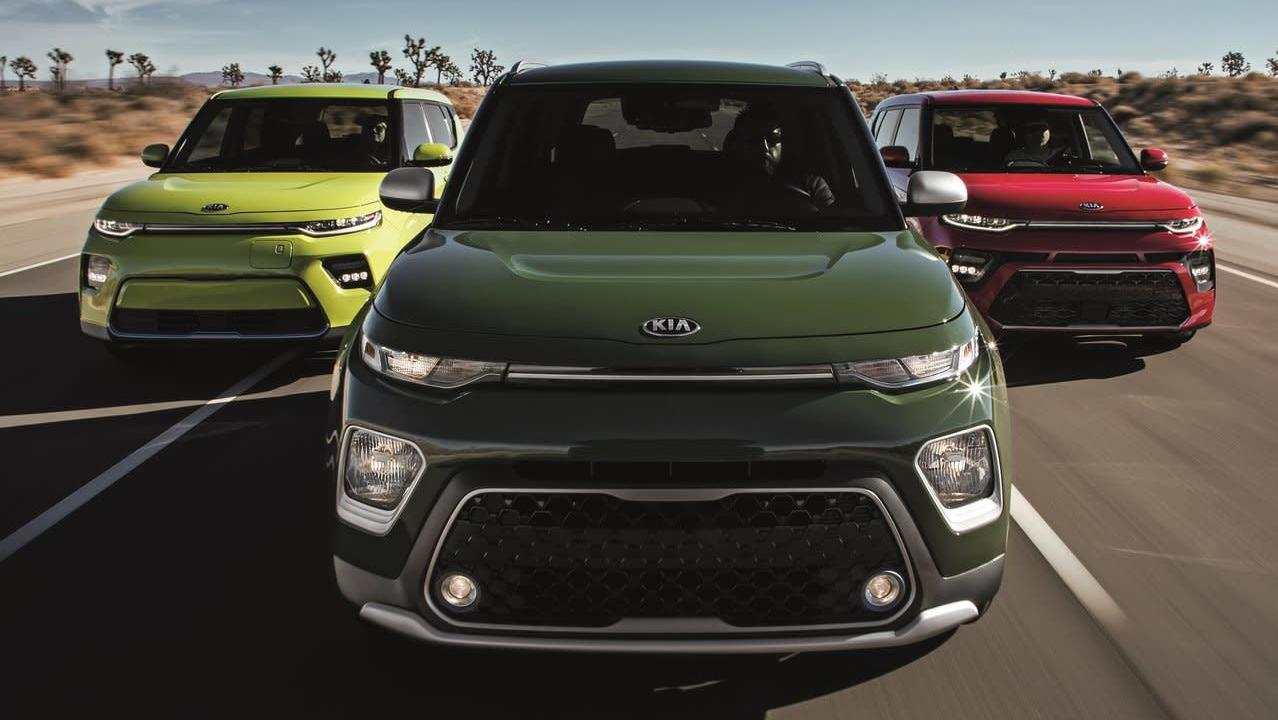
A recall is underway for late model year Kia Seltos and Kia Soul models. The recall affects just over 147,000 2020-21 cars from the South Korean carmaker, which plans to notify its dealers and drivers in early June, according to Automotive News.

The defect prompting this recall involves the piston oil rings in certain 2020-2021 Kia Seltos and Kia Soul cars. Inconsistent heat treatment during the production of the piston oil rings yielded a harder material which can scuff the cylinder bore in the motor.

Over time, this could lead to increased oil consumption and possibly even a seized connecting rod bearing, according to NHTSA.

These defects can make the engine stall and if drivers are on the road at the time, it could lead to an accident. You wouldn’t want your engine to stall, say, when driving up an on-ramp or when overtaking on the highway.

Also, there is some fire risk involved in what NHTSA refers to as “limited cases” if a connecting rod were to puncture the engine block, which could leak engine oil onto a hot exhaust. Four fires may have already been linked to the defect.

So, Kia is set to replace the engines in the affected cars and may also install sensors than can detect damage from the piston rings, according to the NHTSA report:

All owners of the subject vehicles will be notified by first class mail with instructions to bring their vehicles to a Kia dealer to have their engine inspected and if necessary, the engine will be replaced. When available and as a preventative measure, dealers will also be instructed to install a Piston-ring Noise Sensing System (PNSS) software to alert the driver of potential damage to the piston oil ring. Kia will reimburse owners for repair expenses already incurred pursuant to Kia’s General Reimbursement Plan filed May 11, 2020.

Any owners who may have already spent money on related repairs will be reimbursed by the carmaker.

The recall affects mostly the Kia Soul. These account for the majority of the cars in the recall, about 125,000 vehicles.

The Kia Seltos accounts for about 22,000 cars. Specifically, it’s the 2.0 liter Nu MPI engine-equipped Seltos which are affected.

No loss of life has been recorded due to the defect and there are no related accidents, injuries or fatalities, either. It’s just the fires for now, but that is still a big deal and one certainly worth heading to the dealership to get fixed.

Seltos and Soul owners will receive notifications in the mail. If you do own one of the new Kias in question and you’d rather not wait for the snail-mail notice, I recommend heading to the NHTSA site and punching in your VIN.


Hyundai Is Recalling 390,000 Cars, Adding To The Kia Cars Already Recalled For Fire Risk - Jalopnik​

1620401480897.png


1620401559614.png

1620401579582.png

Hyundai Motor Company is recalling a large number of cars, once again. Hyundai will recall more than 390,000 cars in the U.S. and Canada, because these cars are subject to engine fires, as reported by the Associated Press.

This may feel a little like deja vu. We recently reported on a large recall of just over 147,000 Kias, which is owned by Hyundai Motor Company. That recall is related to this new one, as it involves the same engines as those in the Kia Seltos and Soul.

This time, however, it’s affecting three of Hyundai’s models: the Elantra, Kona and Veloster.

The defect that prompts a part of this recall is the same as that in the Kias. Inconsistent heat-treatment at the time of the piston oil ring production yielded harder material, which could damage the engine cylinder bores and wear them down. This could lead to the engine stalling or possibly result in an engine fire.

The model years affected reflect those of the Kias, which is to say they are late model and current generation cars. The Hyundai recall is actually bigger, since it applies to three models.

All told, Hyundai is recalling “nearly 187,000 2019 and 2020 Elantras, and 2019 through 2021 Konas and Velosters,” for the fire issue, per the AP.

Drivers of these cars will have to bring their Hyundais to their dealer, who will then inspect and replace the whole engine if it’s deemed necessary. Further precautionary measures involve fitting sensors that will scan for cylinder bore damage using piston noise.

Hyundai will send recall notices to owners of all the cars outlined here in June, but, as always, you don’t have to wait. You can either use the NHTSA app to keep track of the recall or use the VIN tool on the NHTSA site.


510,000 Ram Pickups Recalled for 'Wheel Separation' Concerns Due to Bad Owner's Manual Instructions - The Drive​

In other words, your wheels could fall off.


1622350766137.png

Typically, the best thing to do is to read your owner’s manual from cover to cover when you get a new (or new to you) vehicle. Many people don’t, however, consulting it only when there’s an issue.

In fact, Ford decided to do away with paper manuals altogether for its popular pickup, going with a digital version available via the F-150's touch screen infotainment system. That move suits the digital generation perfectly, and also saves the company tons of money in paper costs.

Neglecting to read the instructions may have been the best choice as it relates to Ram heavy-duty trucks from model years 2012-2021, however; the owner’s manual for those years includes faulty lug-nut torque instructions.

As a result of following the manual’s directions, “the corresponding vehicles may have had their lug nuts over-torqued, a condition that could conceivably compromise studs and lead to wheel separation,” Stellantis said in a news release yesterday.

That could be troublesome as you’re rolling down the highway with or without a sizable payload.

About a half-million of Ram’s trucks have been recalled, including 2012-2021 Ram 3500 heavy-duty pickups and 4500 and 5500 cab-chassis trucks. The issue mainly affects U.S.-market trucks, plus roughly 31,000 in Canada and 32,000 or so in Mexico.

If you have a brand-new vehicle that hasn’t experienced service that requires wheel removal, have no fear: the lug nuts were torqued correctly during assembly. All you need is the updated manual.

“Dealers are currently in possession of correct service instructions, and production vehicles are now being delivered with updated owner’s manuals,” the news release continues. “The campaign is limited to vehicles equipped with dual rear wheels and flanged lug nuts.”

Pickups and trucks in this category that have been over-torqued by following the instructions in the manual may still be fine, but the company is recalling them to inspect the wheel studs. If they need to be replaced, Ram will do so free of charge.

As of today, no related injuries or crashes have been reported. If you need more information, call (800) 853-1403.


Ford Is Recalling A Bunch Of Super Duty Trucks Because The Front Wheels Could Come Off - Jalopnik​

Ford says that the recall affects 17,616 Super Dutys


1623827056883.png

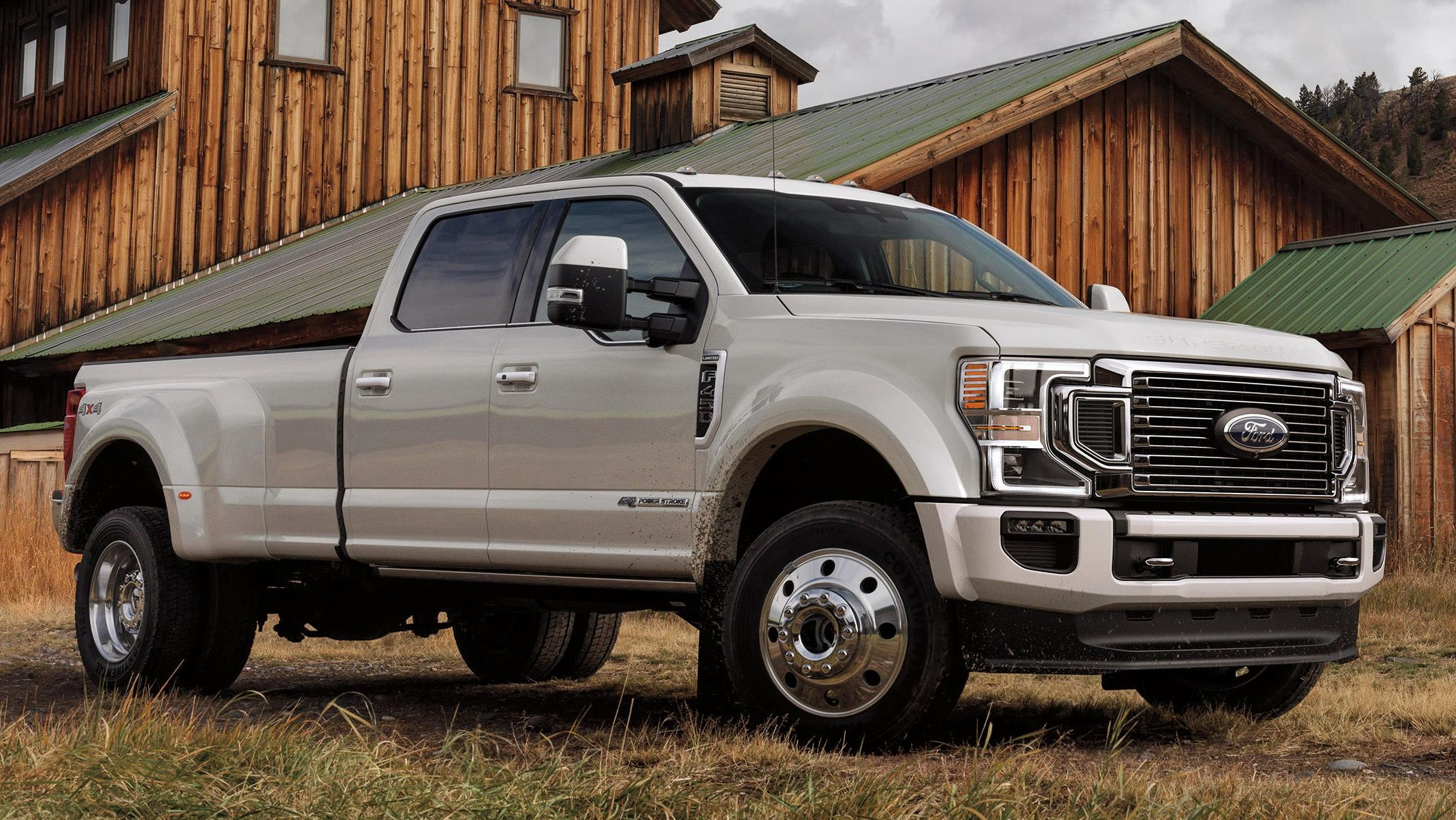
Ford said Monday that it was recalling 17,616 Super Duty trucks in the U.S. and federal territories from model year 2021. The issue, not a small one, is that the front wheels could detach.

Ford blames this on hub extenders that “were not properly tightened by the supplier.” The recall only affects certain 'dually' models of the Super Duty;

Ford will reach out to you if your truck is affected beginning next week, but, as always, you can also check on the website of the National Highway Traffic Safety Administration.

Ford says that no crashes and no injuries have resulted from the issue, though the notifications will also include an instruction that you don’t drive your Super Duty until it’s fixed, if you are one of the affected.


GM recalling 135,000 SUVs with plastic jacks that can break - autoblog​

It 'may not be sufficiently robust' if not correctly positioned

1624111087327.png

General Motors is recalling 135,400 compact crossovers because their emergency jack can break under load.

The problem occurs when the jack — which is plastic — isn't positioned correctly as detailed in the owner's manual. This can cause the jack to fracture.

If the jack breaks and the vehicle collapses, there's a risk of injury or death, according to an NHTSA recall alert.

The recall involves the 2020-22 Buick Encore GX and 2021-22 Chevrolet Trailblazer.

A GM test driver discovered the problem when he broke a jack during a durability test on a Trailblazer. GM started investigating in April and found 21 claims of jack failures, including one reported injury.

"This jack design may not be sufficiently robust against fractures if improperly or incorrectly positioned on the vehicle frame by the user," a NHTSA safety report said.

GM will start notifying vehicle owners July 26. It will provide free replacement jacks that are made of metal.


Automotive Part Maker Finds Takata Falsified Seatbelt Tests: Report - Jalopnik​

There are reportedly 1,000 different cases of falsification.

1624245889608.png

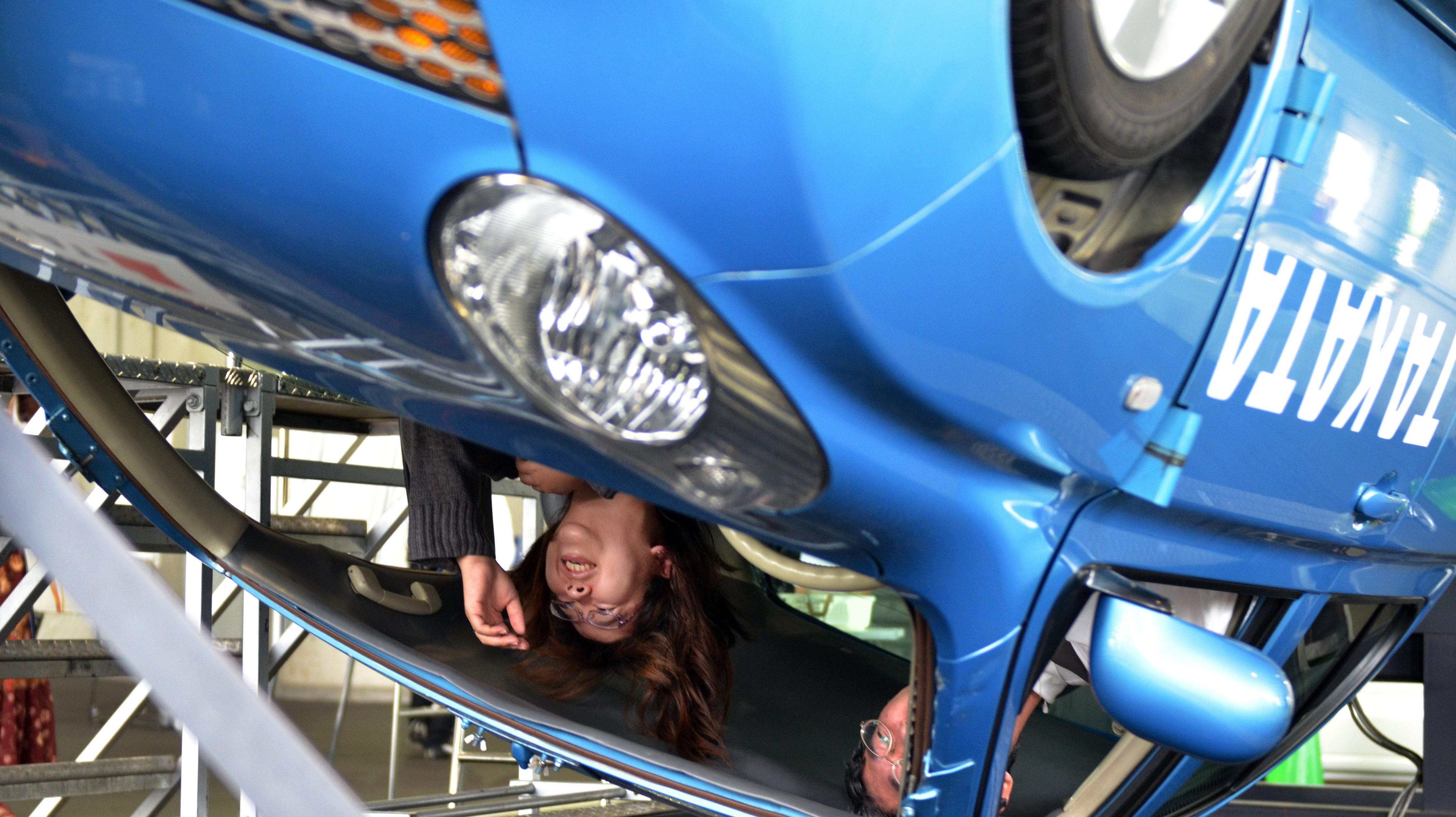
The Japanese arm of Joyson Safety Systems, a United States-based automotive safety component maker, found 1,000 cases of data falsification when it came to Takata’s seatbelt tests, Reuters reports.

This investigation began back in October of 2020, and the results are conclusive: plants in Hikone, Japan and in the Philippines were found to have falsified test data on belt webbing for adult seatbelts and child safety seats.

This webbing is the core of the belt’s strength, so it’s crucial that these elements are in top condition.

Unfortunately, the plants in question doctored data in order to meet client standards. It does not appear that these elements compromised safety, and there are currently no recalls issued for the belts at the moment.

That said, Hisayoshi Iwamitsum president of JSS Japan, said JSS Japan submitted an investigation report to Japan’s transport ministry on Friday.


Porsche is preparing a global recall of the Taycan EV - Autoblog​

Owners have reported problems with sudden unexpected loss of power

F34wideoffset.jpg


Porsche is reportedly preparing to recall all of its Taycan electric cars globally following reports of sudden unexpected power loss.

The National Highway Traffic Safety Administration (NHTSA) in the United States opened an investigation into reports of power loss on May 17, after it received nine complaints from owners "alleging a loss of motive power while in motion at any speed without warning to the driver."

The complaints were received from owners of 2020 and 2021 model-year Taycans, and six of the nine would not restart after the issue.

In addition to the 800-volt lithium-ion battery pack that provides power to the vehicle's electric powertrain, the Taycan includes a 12-volt auxiliary battery.

NHTSA's Office of Defects Investigation (ODI) explains that "a loss of charge in the 12-volt battery may deactivate the entire electrical system and prevent the vehicle from operation."

According to a report from Bloomberg that cites "people familiar with the matter," Porsche will announce a global recall of the Taycan within the coming days. The recall will fix the software glitch that is apparently at the root of the problem.

NHTSA's ODI also sent a letter on June 11 to Porsche parent Volkswagen requesting information about the Audi E-Tron GT and RS E-Tron GT "to gather information in support of ODI’s comparative analysis of peer vehicles" of the Taycan.

Audi's electric sedan uses a similar electric powertrain as the one that debuted from Porsche, though it's not clear if the issue affecting the Taycan will spread to the Audi division or to the Taycan Cross Turismo variant that was introduced for the 2021 model year.

 
Chevy Bolt EV catches on fire after receiving both of GM’s ‘software fixes’ - Electrek

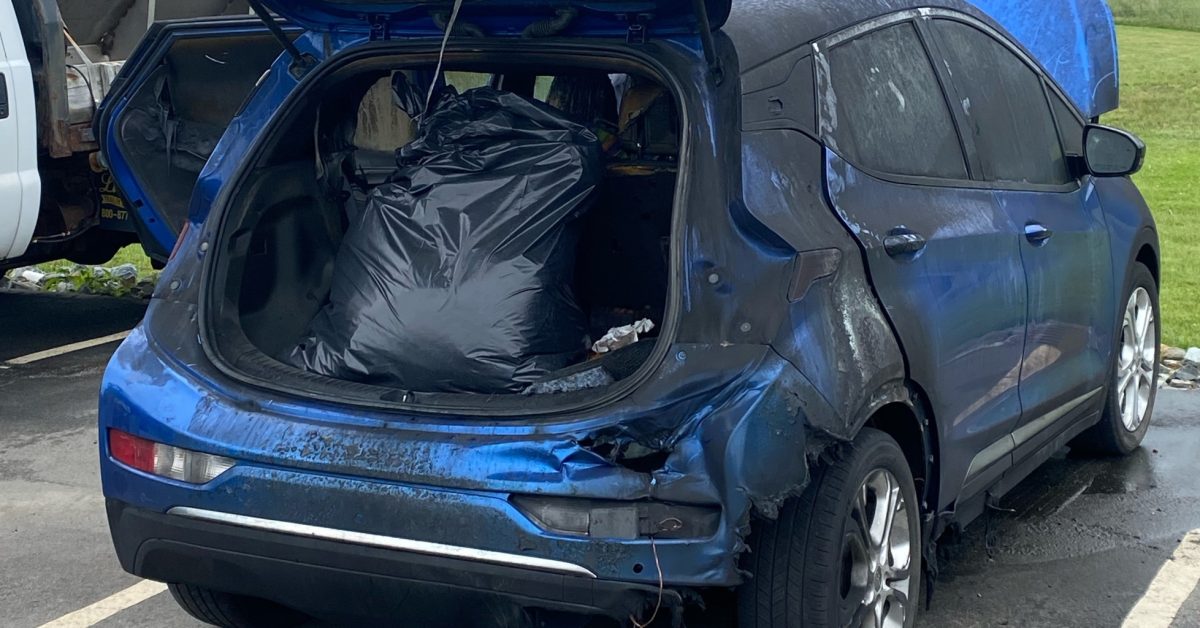
1625762058798.png

Electrek‘s take


Putting all these things together, this paints a bleak picture.

That makes that 2019 Bolt model more likely to catch fire than a 2019 gas vehicle when parked at home.

That previous fire from May? The only contact the previous fire victim (Sharath) had from GM after the initial call (once Electrek provided GM with his contact info) was a month after the fire when they did an inspection and took the car. The owner is living in a rental home paid for by their insurance. GM has not offered any help or communication.

Many people were sceptical that software could prevent another fire. If there is actually a physical problem with the batteries, their advanced software appears unable to reliably prevent a fire. It doesn’t even seem to always be able to catch defective batteries.

While GM did make many owners happy with either buy-backs or MSRP swaps, what’s very frustrating is how inconsistent they were. If you were lucky enough to be in a state with strong lemon laws, it looks like hundreds of owners were able to get either money in their pocket, or swapped into a new Bolt. Everyone else? They mostly rejected.

GM has not offered Sharath a replacement vehicle. They’re giving buybacks and MSRP swaps to hundreds of owners due to the risk of fire, but have not offered a replacement vehicle to those with an actual fire.

Bolt owners are the early adopters, supporting GM on their road to an all-electric future. Yet they have vehicles that they are afraid will catch fire. No information has been provided other than a vague indication that software can fix the problem. No compensation offered, or credit for what has happened.

GM has admitted there’s a manufacturing defect. Their software doesn’t look like it can reliably prevent a fire. At this point, it is clear that it’s just a matter of when, not if, another fire will occur. Luckily this one had no injuries, but what if the next one has kids sleeping next to the garage?


Hyundai Is Recalling 390,000 Cars, Adding To The Kia Cars Already Recalled For Fire Risk - Jalopnik​

View attachment 1064615


View attachment 1064617

View attachment 1064619


Ok this is a hectic defect.
Any idea if it involves SA vehicles as well?
There are differences between USDM and SA models but I wouldn't think the rings would be different.
 

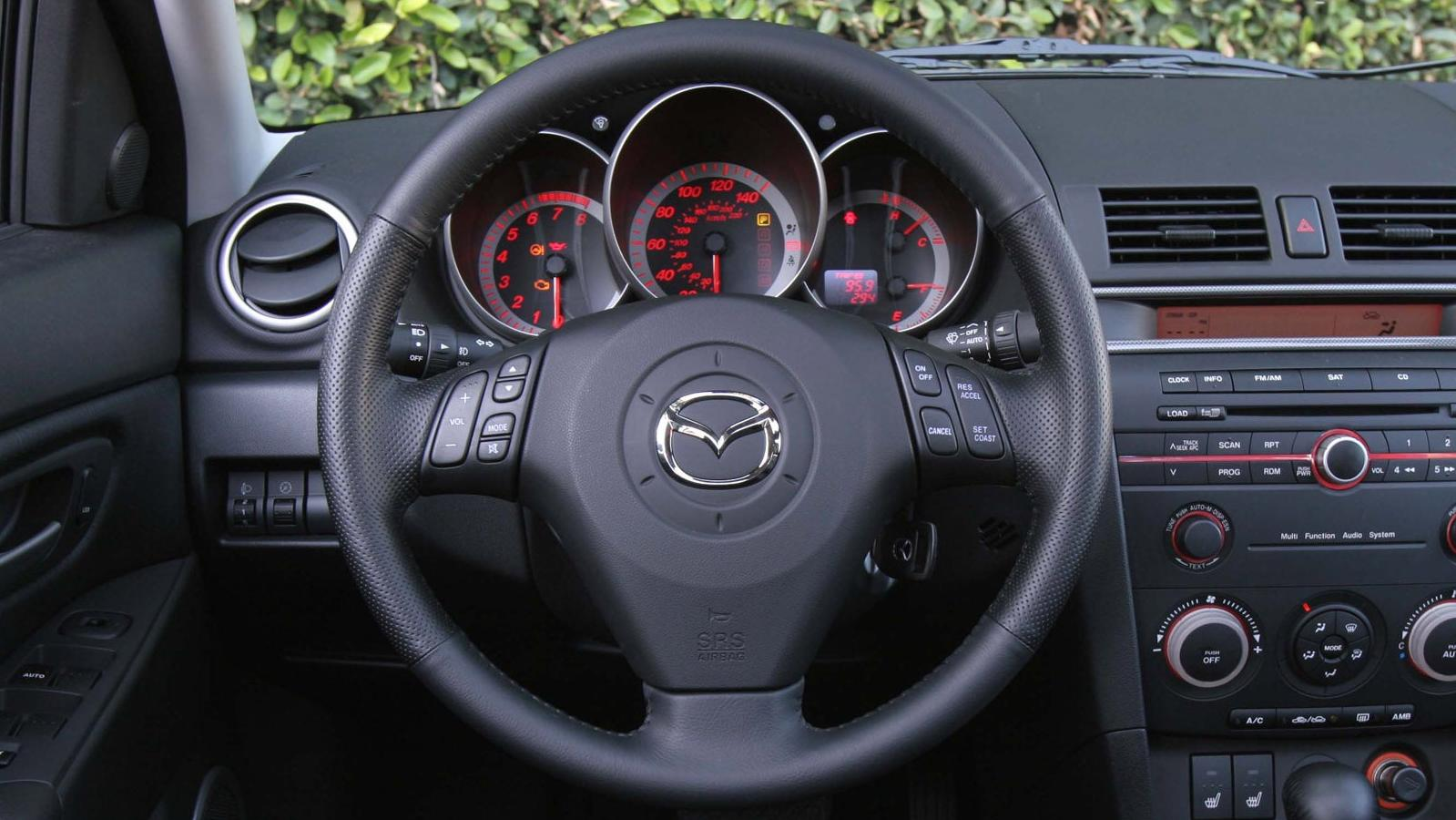
Mazda Is Recalling Over 260,000 Cars Because The Steering Wheel Logo Might Explode Into Your Face After Airbag Deployment - Jalopnik​

The recall is for certain 2004-2007 model year Madza 3s.

1625851010994.png

Nearly six years ago, according to documents filed with the National Highway Traffic Safety Administration, Mazda got its first report of the steering wheel Mazda logo fragmenting after airbag deployment, and hitting someone in the face.

Mazda looked into the matter, and decided that there was a problem with the material used to make the logo, but that it didn’t pose a significant safety risk. Then more reports of people getting hit in the face started coming in.

Mazda received ten reports of such incidents from September 2015 through August 2019, according to the documents and also was sued twice in the U.S. over the issue, according to the documents.

It said it was choosing to act now, in the form of a recall for 260,915 2004-2007 Mazda 3s, “out of an abundance of caution” and after, a Mazda spokesperson said, that it had gotten a report of a “serious” case in March 2019.

The NHTSA documents show what happened in between those incidents, and include details about the original investigation.

The anatomy of a recall (emphasis mine):

December, 2015 through February, 2016: The part supplier and Mazda started to investigate the root cause. Hydrolysis was confirmed to occur on the broken logo which was made of polyurethane. The hydrolysis was hypothesized to accelerate deterioration of the logo and reduce its strength.

February, 2016: As a result of high heat and humidity durability test, the molar weight of the logo was found to be reduced, which indicated the hydrolysis was duplicated in the polyurethane sample.

March, 2016: It was found that the supplier made a change to the material of the logo, from polyurethane to polyester in June, 2006. This material change was intended to improve the logo appearance. As a result of later investigation, the hydrolysis was confirmed to not occur on logo made of polyester. This material change was also found to incidentally be a corrective measure for subsequently produced vehicles.

April, 2016: Mazda found that the logos for other vehicle models were not made of polyurethane, which may be subject to hydrolysis. Accordingly, there is no possibility for this defect to occur on other vehicle models.

January, 2017: Mazda determined at this time that the projected fragments could only cause superficial damage or injury and the safety risk was low because the plastic fragments are very light in mass. Up to this time, considering the occurrence rate of collisions necessitating air bag deployments in the field, Mazda had estimated the occurrence rate of this defect in the field would be low.

February, 2017: Mazda judged that the degree of injury caused by this concern was equivalent to the type of injury that can occur during a normal air bag deployment in a crash. Accordingly, Mazda decided to monitor any field occurrences.

After that, nine more incidents piled up, with the last one, reported in August 2019, a month after which Mazda said that “sufficient information and part analysis was still unavailable.”

Two months after that, in November 2019, Mazda said it began preparing a replacement part.

Finally, in June of this year, Mazda said that it became, “concerned about a possible increase in injury cases caused by this defect,” and opted to do the recall.

According to the recall report, dealers will replace the emblem cover at no charge and owners will be notified by August 28. Get your recalls done!


NHTSA Issues Chevy Bolt Spontaneous Combustion Warning - Jalopnik​

Affected Bolt owners should park their cars outside and away from buildings

1626342745774.png

The National Highway Traffic Safety Administration has issued an alert for all 2017 to 2019 Chevrolet Bolt owners, following the recent fire in Vermont State Representative Timothy Briglin’s car and another noted in the missive.

This is, of course, after two safety recalls for potential fire hazard due to a manufacturing defect in the LG Chem battery packs.

On Wednesday afternoon, the NHTSA officially told used Bolt owners to park their vehicles outside and away from buildings whenever possible, and also recommended that Bolts not be left charging overnight.

Both of these recommendations make Bolt ownership annoying at best and impossible at worst. If you drive to work every day and charge every night, a government safety admin is telling you to, um, stop doing that.

An original recall was issued in November of 2020 for potential fire hazard in the high-voltage battery pack. The cells had a small possibility of heating up and igniting internally.

It’s possible that the fire inside the battery could spread to the rest of the car, and potentially beyond the car if it is parked near a building, you know, where chargers generally are.

That recall affected 50,932 Bolts, and every single one of them is again affected.

NHTSA says it has been made aware of two Bolt EV fires in vehicles that have already received GM’s recall “fix”. It would seem that the fix is potentially not actually a fix.


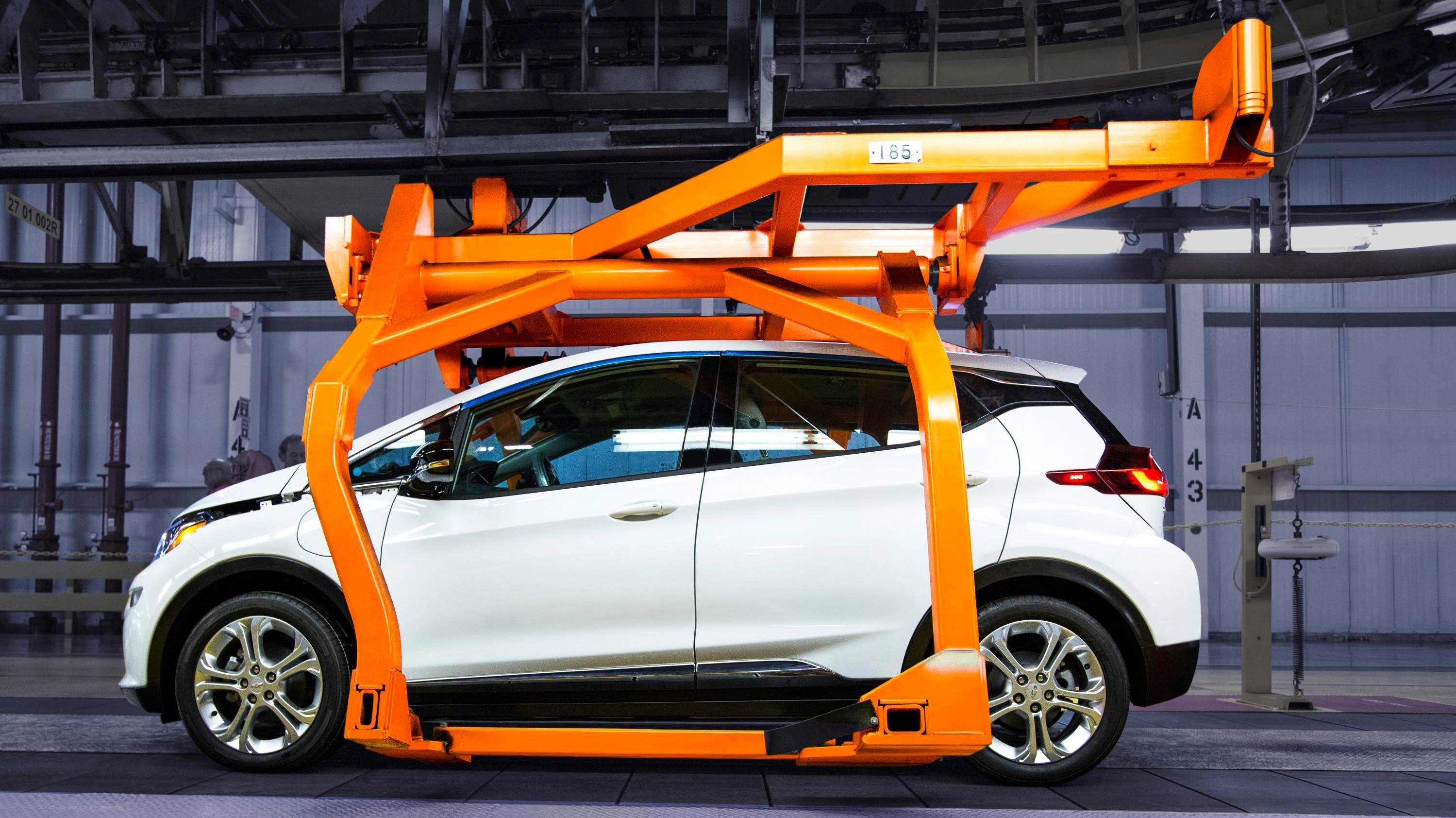
GM issues new recall for nearly 69,000 Bolt EVs for fire risks - Autoblog​

GM and NHTSA urged owners to park outside last week

1627055303206.png

General Motors Co said Friday it is issuing a new recall for nearly 69,000 Chevrolet Bolt electric vehicles (EVs) worldwide for fire risks after reports of two new fires.

The Bolt EVs were recalled in November for fire risks and at least one of the two new fires was in a vehicle that had already had the software update released as part of the recall.

The recall comes after GM and U.S. safety regulators last week urged those owners to park vehicles outside and away from homes after charging.

The largest U.S. automaker said "experts from GM and (battery maker) LG have identified the simultaneous presence of two rare manufacturing defects in the same battery cell as the root cause of battery fires in certain Chevrolet Bolt EVs."

GM said it will replace defective battery modules in the recall population but it is not clear how many are defective. The recall includes 50,925 U.S. vehicles.

Last week, the National Highway Traffic Safety Administration urged those 50,925 Bolt owners to park outside and away from homes and other structures after charging because of fire risks.

The Chevrolet Bolt vehicles being recalled again are from the 2017-2019 model years and were first recalled for the potential of an unattended fire in the high-voltage battery pack underneath the backseat’s bottom cushion.

GM said Friday that all of the nearly 69,000 Bolt owners should return vehicles to a 90% state of charge limitation that the company first instructed owners to use in November before the recall fix had been completed.

The automaker also asked owners to charge their vehicle after each use and avoid depleting their battery below approximately 70 miles of remaining range, where possible, to reduce the risk of a fire.

GM said it was still recommending customers park vehicles outside immediately after charging and not leave their vehicles charging overnight — and to get the software update as part of the initial recall.

GM said earlier the high voltage batteries being recalled were produced at LG Chem Ltd's Ochang, South Korean facility.


BMW, Rolls-Royce and MINI models recalled for seat belt retractor issue - BMW Blog​

1628092097687.png

A host of models from the BMW Group are currently being recalled in the U.S. for a potential issue with the seat belt retractor. This problem was apparently reported by the supplier and it affects BMW, Rolls-Royce, MINI and Toyota models.

According to BMW, the seat belt retractors on the affected vehicles may have not been made to the precise specifications demanded by the German car maker by the supplier.

To be more precise, the safety belt retractor (except for the driver’s seat) may be faulty. As a result, it may not be possible to firmly secure a child seat in place using the Automatic Locking Retractor (ALR) function.

However, in a crash, the safety belt will still lock and firmly secure a child seat (or a passenger) via the Emergency Locking Retractor (ELR) function.

Also, the LATCH system (lower anchors and top tether) is available in all potentially affected vehicles for use with a child seat, if the child seat has the corresponding LATCH system.

BMW states that not all safety belt retractor assemblies are affected on the cars that are currently being recalled but a check never hurts.

A total of 21,537 cars will be recalled in North America and this includes the Toyota Supra, since the Japanese model is actually using a lot of BMW parts these days.

Furthermore, every MINI made in 2021 will also be called in, as well as several Rolls-Royce Phantom and Cullinan models.

As for BMW models, the list includes BMW M3 and M4 models made between December 7 2020 and March 4 2021, 3 Series models made between November 30 and May 28, 4 Series models built between December 4 and February 8, 5 Series sedan models made between November 23 and February 25 as well as X1 and X2 models built between December 4 and January 29.

BMW says that only about 1 percent of the cars are expected to have faulty retractors, 'so you shouldn’t be too worried'.


BMW recalls Toyota Supra again, this time over loss of power brakes - Road/Show​

The recall affects a bunch of non-Toyota BMWs too, but luckily the fix is pretty simple.

1628682593641.png

The world is a weird place, and for proof of that, one need only look to BMW's latest recall that includes a Toyota.

That's right, the Supra is getting recalled again -- or rather 13,014 of them are -- for an issue that could result in the loss of power brake assistance.

Of course, it's not just the Supra that is affected by this recall; plenty of non-Toyota BMWs are getting hit with it as well, according to a recent filing with the National Highway Traffic Safety Administration.

The recall specifically affects the 2020 and 2021 Supra and the 2020 BMW M340i, 2020 BMW 540i, 2020 BMW X3 M40i, 2020-2021 BMW X4 M40i and 2020-2021 BMW 745Le.

It also covers the 2019-2021 BMW Z4 M40i on which the Supra is based.

The fault can occur when the engine's vacuum pump becomes damaged through improper use of the starter button and brake pedal, which can cause the engine's crankshaft to rotate backward, thus damaging the pump.

For example, double-click the start button, and you're going to have a bad time. Quickly tap the brake pedal while starting the engine, and again, you're going to have a bad time.

The fix for this is thankfully pretty straightforward, assuming you haven't already borked your vacuum pump, and involves a software update.

If you have damaged your pump, then congratulations, you're getting a new one (and a software update).

Toyota has also issued a stop-sale for vehicles still on dealer lots affected by this recall, but we don't expect it to last for long given the quick fix.

Owners of affected vehicles can expect to receive notification from BMW starting on or around Oct. 1. If you think your car might be affected and you have questions, you can contact BMW's USA customer service department at 1-800-525-7417.

 
Top
Sign up to the MyBroadband newsletter
X