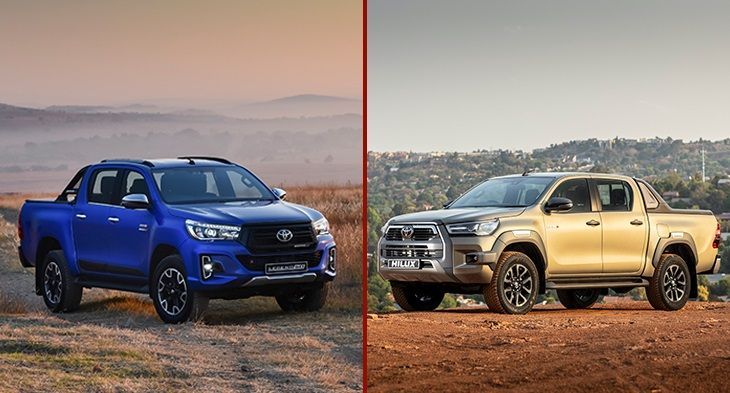
The Toyota Hilux Thread

How Toyota got Hilux to 150 kW

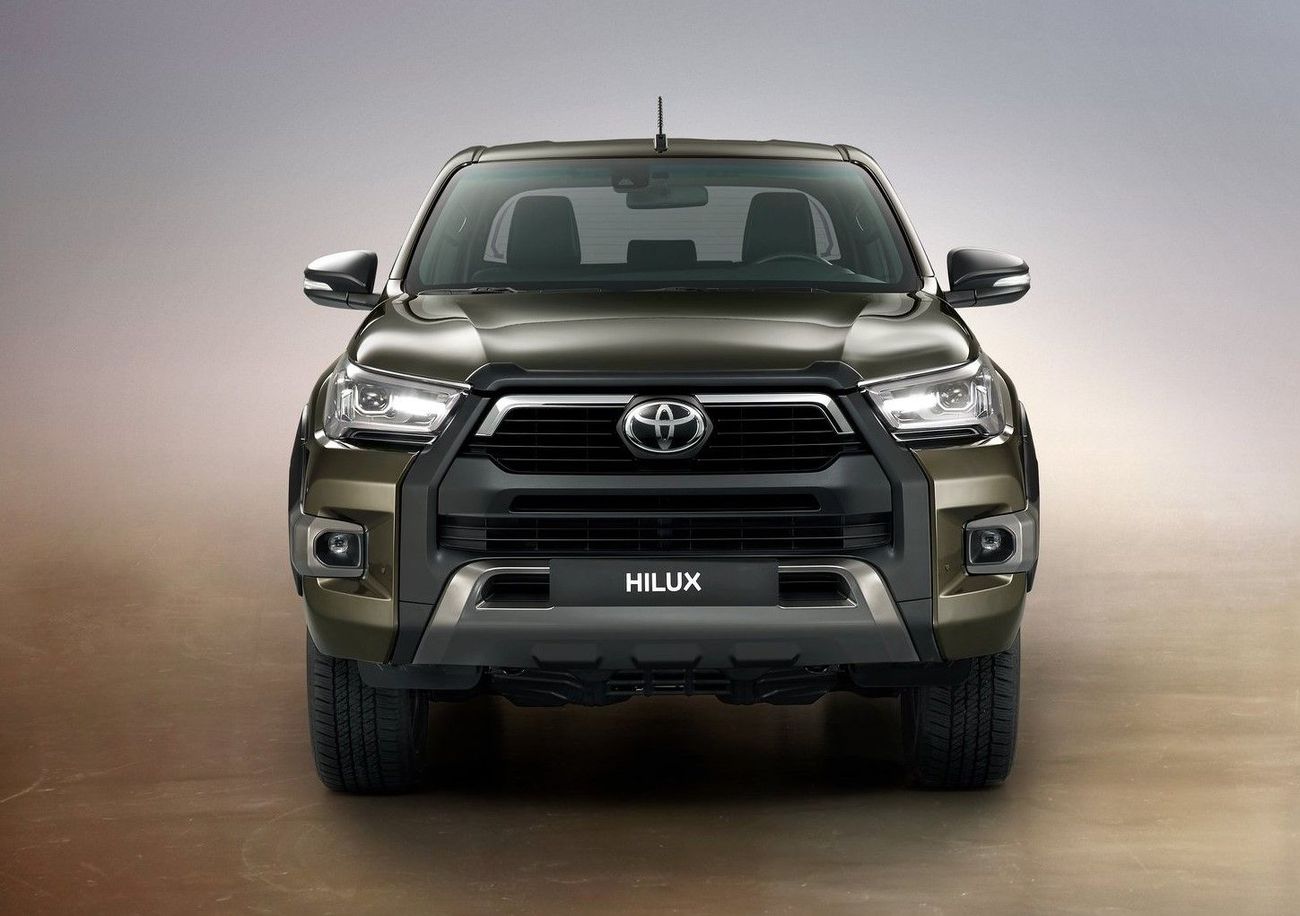
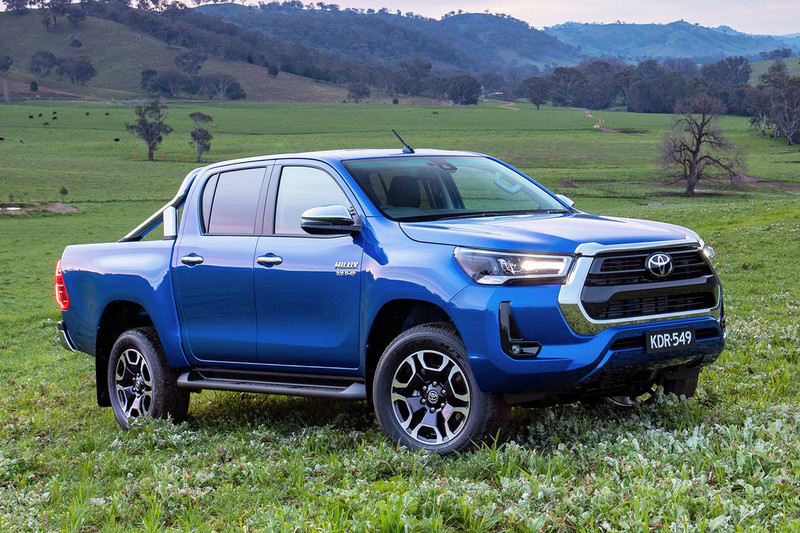
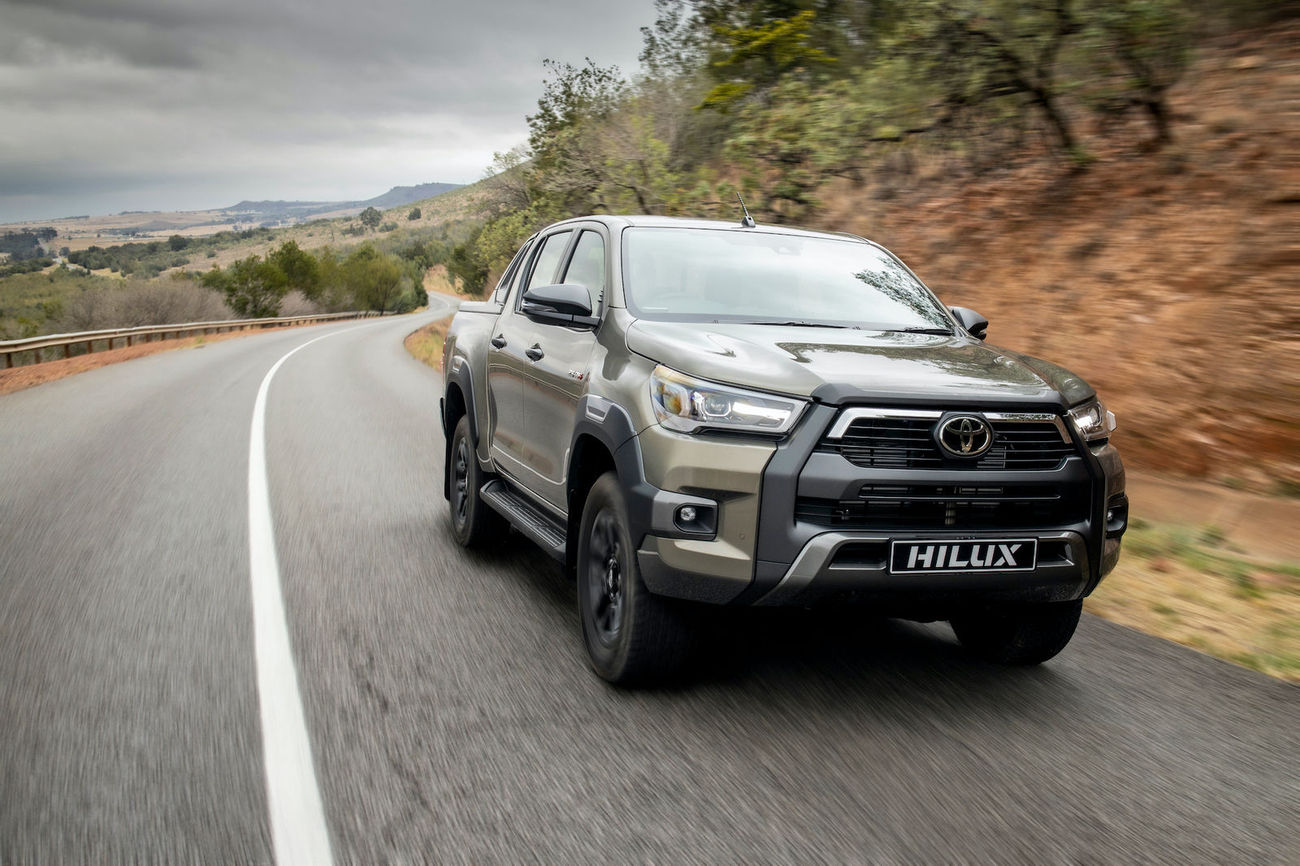
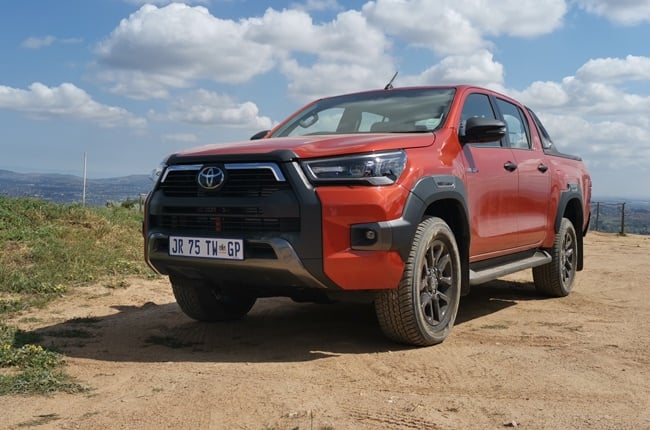
Hilux is everything to the local bakkie market and as such, the updated engines announced earlier this year, are a very big deal.


When Toyota confirmed that its 2.8-litre turbodiesel engine would eventually get closer to rivalling the Ford’s Ranger bi-turbo 2-litre in performance, Hilux fans were thrilled. With a peak power output of 150KW and 500Nm of torque, the revised Hilux 2.8-litre engine is everything followers of the most popular Japanese bakkie model desired.

How did Toyota achieve those engine output gains? Was it only a question some clever engine control unit recalibration?

New details about the 2.8-litre engine upgrade indicate that engineers at Toyota have taken quite a dedicated approach to boosting performance, by virtue of some rather meticulous mechanical engineering.

 
Toyota Hilux (2021) International Launch Review

There’s a lot in store for the SA bakkie market – including an upcoming update to the market-leading Toyota Hilux. What should we expect from the upgrades? Our Australian correspondent drove a refreshed Hilux on-road (and off it) to whet our appetites. Has Toyota done enough to keep its bakkie at the top?

Does the Hilux keep its crown, then?

If you, like many thousands of South African consumers, know you want a Hilux, and you can’t be shaken from that, thanks for spending your time reading this review. I truly hope it has helped you to know what to expect when you lay down your hard-earned cash on the next iteration of a legendary bakkie...

However, if you’re unsure of whether the Hilux is right for you, then I’d thoroughly recommend you revisit the Ford Ranger or wait for the arrival of the new-generation Isuzu D-Max before signing on the dotted line, as those two bakkies stand out as offering better blends of liveability and technology than the Hilux derivative I sampled.


Hilux 1.jpgHilux 2.jpgHilux 3.jpgHilux 4.jpgHilux 5.jpgHilux 6.jpgHilux 7.jpg
 
New Toyota GR Hilux to debut 3,3-litre V6 in next-gen range – report

The pieces of the Toyota GR Hilux puzzle are slowing coming together, with the latest report suggesting the long-rumoured high-performance variant will debut a new V6 turbodiesel engine only in 2023.

According to CarsGuide.com.au, the Japanese firm will base the first full-fat Gazoo Racing version of the Hilux (not to be confused with the GR Sport derivative) on the upcoming ninth-generation version of the popular bakkie. That suggests there will be no proper “go-faster” version of the current, recently refreshed model.

The report claims power will come from Toyota’s “all-new” 3,3-litre V6 turbodiesel engine, which is expected to have its first use in the upcoming Land Cruiser 300.

While peak outputs have yet to be confirmed, the burly oil-burner is expected to make more than 195 kW and 650 N.m in Land Cruiser guise. Such figures would be enough to eclipse those of the outgoing Volkswagen Amarok V6, although by 2023 the German bakkie would have switched to next-gen Ford Ranger underpinnings (with an R variant reportedly on the cards).

 
Next-gen Toyota Hilux will include a Raptor rival with a V6 diesel - report

It’s long been rumoured that Toyota is working on a blue-blooded GR Hilux that will serve as a proper rival to the Ford Ranger Raptor.

According to the latest rumours and rumblings, it looks like that is going to happen, although only in the next generation, according to Carsguide.

The Australian publication also says that the most likely power source for the new GR Hilux will be a brand new 3.3-litre V6 turbodiesel engine that’s also destined for the next-generation Land Cruiser 300 SUV. Its outputs have yet to be confirmed, but Carsguide believes it will offer more than 200kW and 650Nm.

This would certainly give it an edge over the current Ford Ranger Raptor, but with the new-generation Hilux and its GR performance variant only likely to see light of day in 2023 or later, there will most certainly be a new Raptor by that time, and according to previous reports, the new Ford will in fact boast V6 diesel power.

 
Toyota takes aim at Ford Ranger Raptor with new (NZ-built) Hilux Mako

Toyota in New Zealand has taken the wraps off its new Hilux Mako, a thoroughly upgraded version of the popular bakkie conceived to take on the Ford Ranger Raptor.

As reported by driven.co.nz, the new Hilux flagship has been developed by the Japanese firm’s New Zealand division, which clearly isn't prepared to wait until the long-rumoured GR Hilux hits the road (which, granted, is said to be only in 2023).

So, what sets the Mako – which is named after the “strongest, most aggressive shark in the ocean” – apart from a standard Hilux? Well, Toyota NZ has fitted an ARB Old Man Emu suspension and shock absorber kit, raising the front by 40 mm and the rear by 50 mm.

The Hilux Mako furthermore gains 18-inch Black Rhino alloys wrapped in Maxxis Razr 265/60 all-terrain rubber. The braking system has been upgraded with 15 mm-larger discs and uprated pads, along with braided brake lines.


Hilux 1.jpgHilux 2.jpgHilux 3.jpgHilux 4.jpg
 
Pricing scoop! Refreshed Toyota Hilux gains new 'Legend' badge in SA

The facelifted Toyota Hilux is set to launch in South Africa soon and we’ve laid our hands on local pricing for the reshuffled bakkie range.

As before, chassis-cab, single-cab, xtra-cab and double-cab body styles are offered, with all 2,8-litre turbodiesel engines upgrading to 150 kW. Pricing now starts at R288 000 and tops out at R851 100 (head to the bottom of the page for full range pricing).

Interestingly, Toyota South Africa Motors appears to have rolled out new “Legend” and “Legend RS” badges to the line-up, effectively replacing the Legend 50 models from the outgoing range.

In addition, previous SRX variants seem to have been superseded by Raider derivatives. The GR Sport model, meanwhile, has left the line-up, along with a pair of manual versions of the 2,8 GD-6 powertrain.

From what we understand, the base S and SR variants retain the current design, while the Raider and Legend derivatives upgrade to the latest face. Legend models appear to be similar in design to the Hilux Revo Rocco variants offered in Thailand and the Hilux Rogue derivatives available in Australia, complete with extra black plastic cladding up front and along the wheel arches.

Pricing:

Toyota Hilux Chassis Cab 2,0 VVTi: R288 000
Toyota Hilux Chassis Cab 2,4 GD: R325 600
Toyota Hilux Chassis Cab 2,4 GD-6 4x4: R465 200

Toyota Hilux Single Cab 2,0 VVTi S: R291 100
Toyota Hilux Single Cab 2,0 VVTi S AC: R299 800
Toyota Hilux Single Cab 2,7 VVTi RB S: R386 700
Toyota Hilux Single Cab 2,4 GD S: R328 400
Toyota Hilux Single Cab 2,4 GD S AC: R337 200
Toyota Hilux Single Cab 2,4 GD-6 RB SR: R414 500
Toyota Hilux Single Cab 2,4 GD-6 RB Raider: R447 800
Toyota Hilux Single Cab 2,4 GD-6 RB Raider AT: R466 100
Toyota Hilux Single Cab 2,4 GD-6 4x4 SR: R482 000
Toyota Hilux Single Cab 2,4 GD-6 4x4 Raider: R520 700
Toyota Hilux Single Cab 2,8 GD-6 RB Raider AT: R532 300
Toyota Hilux Single Cab 2,4 GD-6 4x4 Raider AT: R540 900
Toyota Hilux Single Cab 2,8 GD-6 4x4 Raider AT: R602 400

Toyota Hilux Xtra Cab 2,4 GD-6 RB Raider: R460 000
Toyota Hilux Xtra Cab 2,4 GD-6 RB Raider AT: R478 200
Toyota Hilux Xtra Cab 2,8 GD-6 RB Legend: R550 000
Toyota Hilux Xtra Cab 2,8 GD-6 RB Legend AT: R574 900
Toyota Hilux Xtra Cab 2,8 GD-6 4x4 Legend: R622 000
Toyota Hilux Xtra Cab 2,8 GD-6 4x4 Legend AT: R647 300

Toyota Hilux Double Cab 2,7 VVTi RB S: R440 000
Toyota Hilux Double Cab 2,4 GD-6 RB SR: R476 900
Toyota Hilux Double Cab 2,4 GD-6 RB Raider: R505 200
Toyota Hilux Double Cab 2,4 GD-6 RB Raider AT: R521 200
Toyota Hilux Double Cab 2,4 GD-6 4x4 SR: R549 200
Toyota Hilux Double Cab 2,4 GD-6 4x4 Raider: R583 700
Toyota Hilux Double Cab 2,4 GD-6 4x4 Raider AT: R609 500
Toyota Hilux Double Cab 2,8 GD-6 RB Legend: R620 500
Toyota Hilux Double Cab 2,8 GD-6 RB Raider AT: R631 900
Toyota Hilux Double Cab 2,8 GD-6 RB Legend AT: R696 200
Toyota Hilux Double Cab 2,8 GD-6 4x4 Raider AT: R706 400
Toyota Hilux Double Cab 2,8 GD-6 4x4 Legend: R733 500
Toyota Hilux Double Cab 4,0 V6 4x4 Legend AT: R765 200
Toyota Hilux Double Cab 2,8 GD-6 4x4 Legend AT: R765 600
Toyota Hilux Double Cab 2,8 GD-6 4x4 Legend RS: R819 000
Toyota Hilux Double Cab 2,8 GD-6 4x4 Legend RS AT: R851 100

 
Upgraded (150 kW) Toyota Hilux: official details for SA released!

We’ve already brought you pricing and initial details of the refreshed Toyota Hilux, but now Toyota South Africa Motors has released extra information on the updated version of its best-selling bakkie.

As we pointed out in that scoop story, the Hilux line-up has been revised (“in keeping with evolving market trends”, says Toyota). The S and SR models retain the outgoing model's front end, while the SRX variants have been replaced by Raider derivatives, complete with the new face revealed back in June 2020.

Raider models fitted with the 110 kW/400 N.m 2,4 GD-6 powertrain feature four-bulb Halogen headlamps, while the 2,8 GD-6 Raider models upgrade to bi-LED headlamps and LED indicators. Both feature 17-inch alloy wheels in a dark-grey metallic finish and wrapped in 265/65 R17 rubber.

Legend models (which effectively replace the Legend 50 derivatives) each feature a trapezoidal grille plus a bonnet protector and skidplate, along with dark-plated headlamp inserts and a centred chrome inlay bearing the Toyota insignia. A set of two-tone 18-inch alloy wheels with darkened centre caps and shod in 265/60 R18 rubber is included.

There’s also an optional “Legend RS” accessory package (for Hilux Legend 2,8 GD-6 4x4 models) which adds a motorised roller shutter, a graphite-coloured sports bar, rubberised bedliner, an assisted tailgate (with a central-locking function) and dust-defence kit. While Toyota SA Motors doesn't say how much the kit costs, our earlier information shows a figure of R85 500.


Hilux 1.jpgHilux 2.jpgHilux 3.jpgHilux 4.jpgHilux 5.jpg
 
Toyota Hilux (2020) Launch Review

Summary

The facelifted Hilux is a concerted effort to lift Toyota's flag-bearer to the top tier of leisure bakkies. Based on our brief initial impression, the bakkie is comfortable and settled on gravel roads, but also more capable on trickier off-road courses. We still have to put the more powerful engine through its paces (and we will get the chance soon), but it felt like there was plenty of grunt and available torque over the 4x4 course we traversed.

Furthermore, the upgrades to the Hilux's infotainment and safety systems have clearly been introduced to meet the contemporary market’s demand for a more connected and safe bakkie, one that is now, more than ever, a lifestyle tool as much as a business one.

 
Five things you need to know about Toyota’s new Hilux

• The updated eighth-generation Hilux is causing a stir since its release this week.

• It's more powerful, but also slower.

• There's even a new RS model available in the line-up.

1. It is more powerful

2. It also happens to be slower

3. Small bumps bother it less

4. It remains pleasingly analogue

5. There is even an 'RS' version

 
Here's what the refreshed Toyota Hilux bakkie looks like in Raider form

When Toyota South Africa Motors released details of its updated Hilux range, the official images showed the flagship double-cab Legend model. So, what do Raider variants look like?

Well, we’ve gathered a few images showing the Hilux in Raider specification. The short gallery above includes an xtra-cab model, a single-cab variant and a double-cab derivative.

As a reminder, while the basic S and SR models have retained the outgoing bakkie’s front end, Raider derivatives (effectively replacing SRX variants) have gained a fresh face.

While the Legend models feature chunky black plastic cladding up front (including on the leading edge of the bonnet) and along the wheel arches, Raider models instead employ a broad chrome border to the new grille and revised “boomerang-shaped” foglamp bezels.


Hilux 1.jpgHilux 2.jpgHilux 3.jpgHilux 4.jpgHilux 5.jpgHilux 6.jpg
 
Refreshed Toyota Hilux bakkie: official accessories for SA released

Wondering what sort of official accessories Toyota South Africa Motors offers for its refreshed Hilux? Well, wonder no more.

The Japanese firm’s local arm offers a raft of extra (factory-approved) fittings for its popular bakkie. Here, we’ll take a look at what accessories are available for the Legend-badged double-cab variants, in addition to the optional RS package, which includes a roller shutter, a graphite-coloured sports bar, rubberised bedliner, an assisted tailgate (with a central-locking function) and dust-defence kit.

We’ll start up front, where you can specify a bonnet protector (in either clear or black), clear headlamp protectors, a Legend-branded nudge bar (in two styles, each offered in gloss black, matte black or stainless steel finishes) and a commercial steel bumper replacement.

Other items include a snorkel, dark-tinted side-window visors, window safety film (in either 100 or 150 micron form), door handle protection film, roof racks, chrome garnish (for areas such as the grille and fenders) and stainless-steel side steps.


Hilux 1.jpgHilux 2.jpg
 
DRIVEN: Toyota Hilux Legend RS 2,8 GD-6 4x4 DC AT

Verdict

The brief was simple: address the three issues – styling, specification and power output – consumers had with the outgoing Hilux, while keeping with evolving market trends (such as the continued shift towards leisure-orientated bakkies); and improve on the already popular pick-up. Now boasting even more bullish exterior styling, myriad convenience items as standard, an array of mechanical modifications and a more powerful 2,8-litre four-cylinder turbodiesel motor, has Toyota managed to address these issues with the second update to its eighth-generation Hilux? It's a resounding yes.

FAST FACTS

Model: Toyota Hilux Legend RS 2,8 GD-6 4x4 DC AT
Price: R851 100
Engine: 2,8-litre, 4-cyl, turbodiesel
Power: 150 kW @ 3 000-3 400 r/min
Torque: 500 N.m @ 1 600-2 800 r/min
0-100 km/h: 10,0 seconds
Top Speed: 175 km/h
Fuel Consumption: N/A
CO2: N/A
Transmission: six-speed auto
Service Plan: nine-service/90 000 km

 
2020 Toyota Hilux: What has actually changed?

Many of you have asked how much has Toyota changed with this facelifted Hilux. Here we highlight some of the key updates.

Despite many pundits often and incorrectly assuming a facelift is just a visual update where a new front bumper is fitted, the changes to the Toyota Hilux are way more than skin deep. This current Hilux platform was launched in SA back in 2016, but the raft of changes brought in with the facelift brings new levels of performance, convenience, and technology.


Hilux.jpg
 
First drive: Toyota’s tweaked Hilux hits the right notes off the beaten track

A number of small improvements and tweaks on a household name rather than wholesale changes has made the Hilux even better and I reckon that the so-called bakkie wars could quite possibly become a one horse race.


Hilux 1.JPGHilux 2.JPGHilux 3.JPGHilux 4.JPGHilux 5.JPG
 
New Hilux too bland? ARB offers extensive accessory upgrade for SA's favourite bakkie

• Toyota launched its heavily revised Hilux in South Africa earlier this month.

• ARB availed a range of new accessories for the Hilux.

• The Hilux is South Africa's best-selling vehicle.

How to make your Hilux carry more

Beyond the new Hilux compatible bull bar and bumper options, ARB also has Old Man Emu suspension kit available for the latest Hilux. Toyota has done a credible job of improving the Hilux's ride off-road ability by reducing friction in the suspension system. Reconfiguring the dampers, bushing, and links have made a remarkable difference in ride quality and traction.

ARB's Old Man Emu GVM kit aims to increase the bakkie's payload, without ruining its ride quality or individual wheel travel.

To achieve that there are Nitrocharger BP-51 internal bypass dampers and coils springs. What makes the BP-51 set-up so effective, is having rebound adjustment in addition to being able to set compression. And its bypass valving allows for a variable damping response, with superior fluid flow, instead of traditional damper internals where the internal fluid flow rate is fixed.

The result is a notable 315kg increase in payload, without any reduction in small-bump terrain sensitivity or overall ride quality. This is ideal for those owners who intend to take their new Hilux double-cab touring deep into Africa, where you need to haul all your gear along.


Hilux.jpg
 
Top
Sign up to the MyBroadband newsletter
X