The Toyota Hilux Thread

You Can Buy A Toyota Hilux With Corn In Brazil

Just bartering your way to a new truck, down there in Brazil.

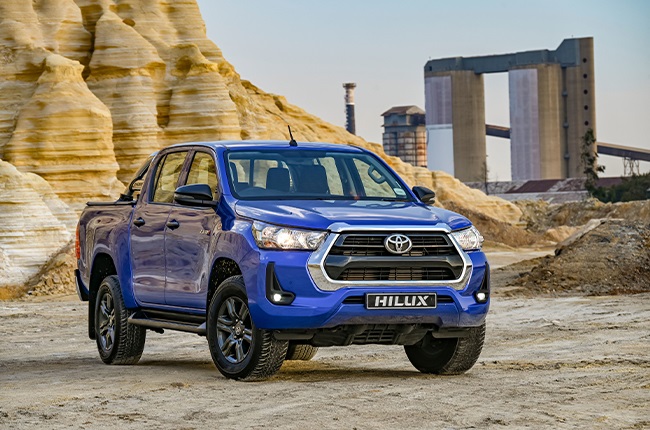
Toyota Brazil says it will now let soy and corn farmers trade grains for a Hilux. The Japanese auto giant wants some of that sweet, sweet harvest, and it will take the grains as payment not just for the Hilux, but the Corolla Cross and the SW4 (Fortuner), too. Crypto is out; corn and soy are in!

It sounds like an unusual arrangement but the program, Toyota Barter, has been around since 2019. Brazil is the biggest soybean producer in the world, per Bloomberg. Trades like this are not unheard of there as banks have tightened borrowing requirements in the last decade, according to Reuters.

Soy and corn production has only increased in the country. There’s less credit and cash around, but there’s plenty of crop. Tractor maker Case also accepts grain trades for its machinery, but trucks can be just as essential to farming. Trucks like the Toyota Hilux, for example.

 
Toyota Hilux vs Ford Ranger: Here’s which bakkie sold the most in July ’21

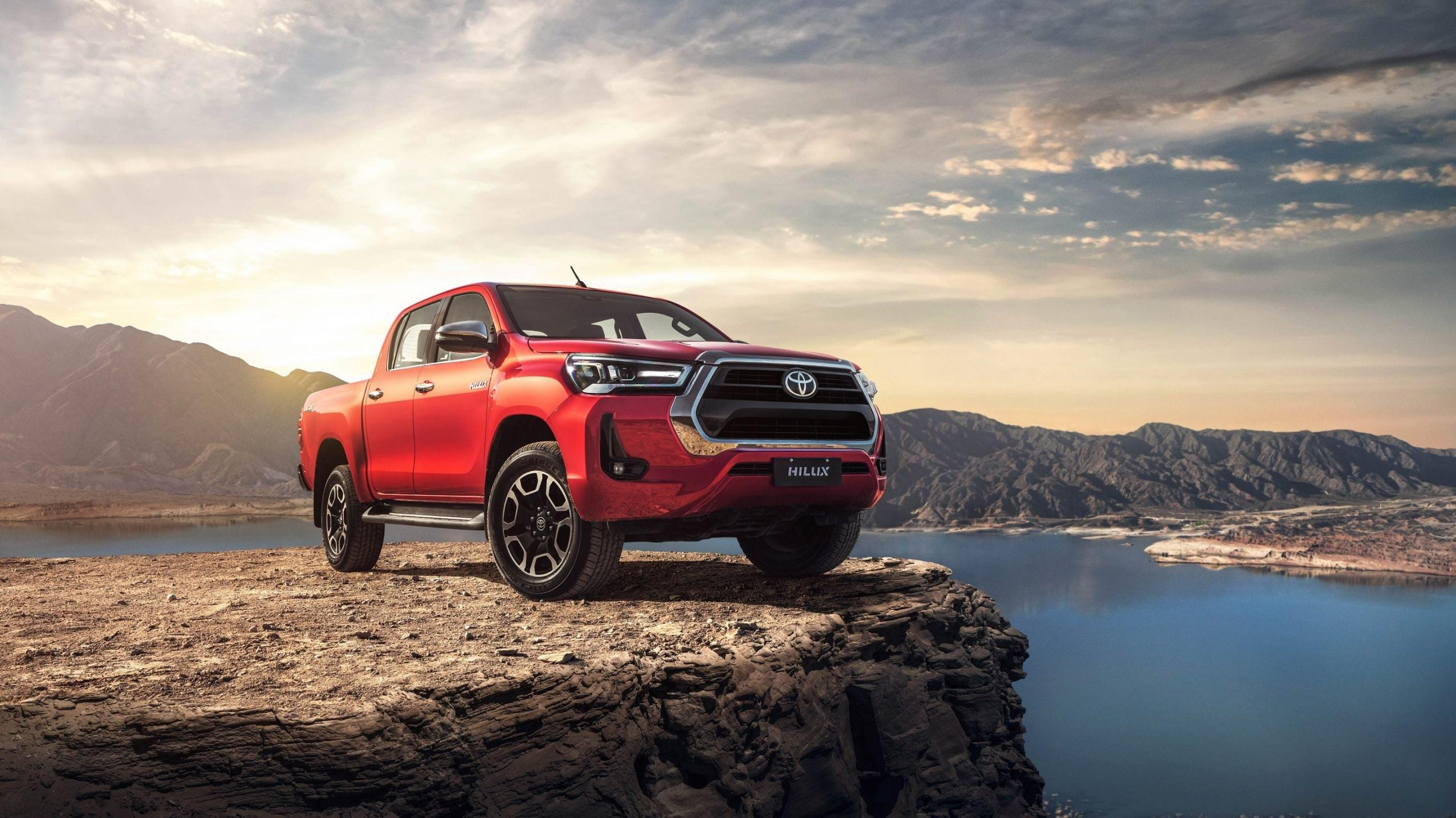
Although July ended quite some time ago, we finally have an indication of how the double-cab bakkie race is going in South Africa with regards to the Ford Ranger and Toyota Hilux specifically. The information is based on what has been reported by Lightstone Auto.

Including the double-cab, extra-cab and single-cab body configurations, Lightstone confirms that the Toyota Hilux leads the race with a total sales figure of 2 836 units while the Ford Ranger lags a bit behind with a figure of 1 620 units.

The sales driver for the Toyota Hilux was the double-cab variant with a figure of 1 355 units sold. This was followed by the single-cab boasting a result of 1 043 units and the extra-cab with 438 units. The Ford Ranger’s most popular bodystyle was the double-cab as well with a reported sales figure of 1 303 units while the single- and extra-cab sold 165 and 152 units respectively.

Year-to-date, the Hilux is well in the lead with a total of 22 654 units reportedly sold. The Ranger challenges this with a result of 13 134 units.

 
New Toyota Hilux GR Sport revealed in Thailand, with low-riding variant

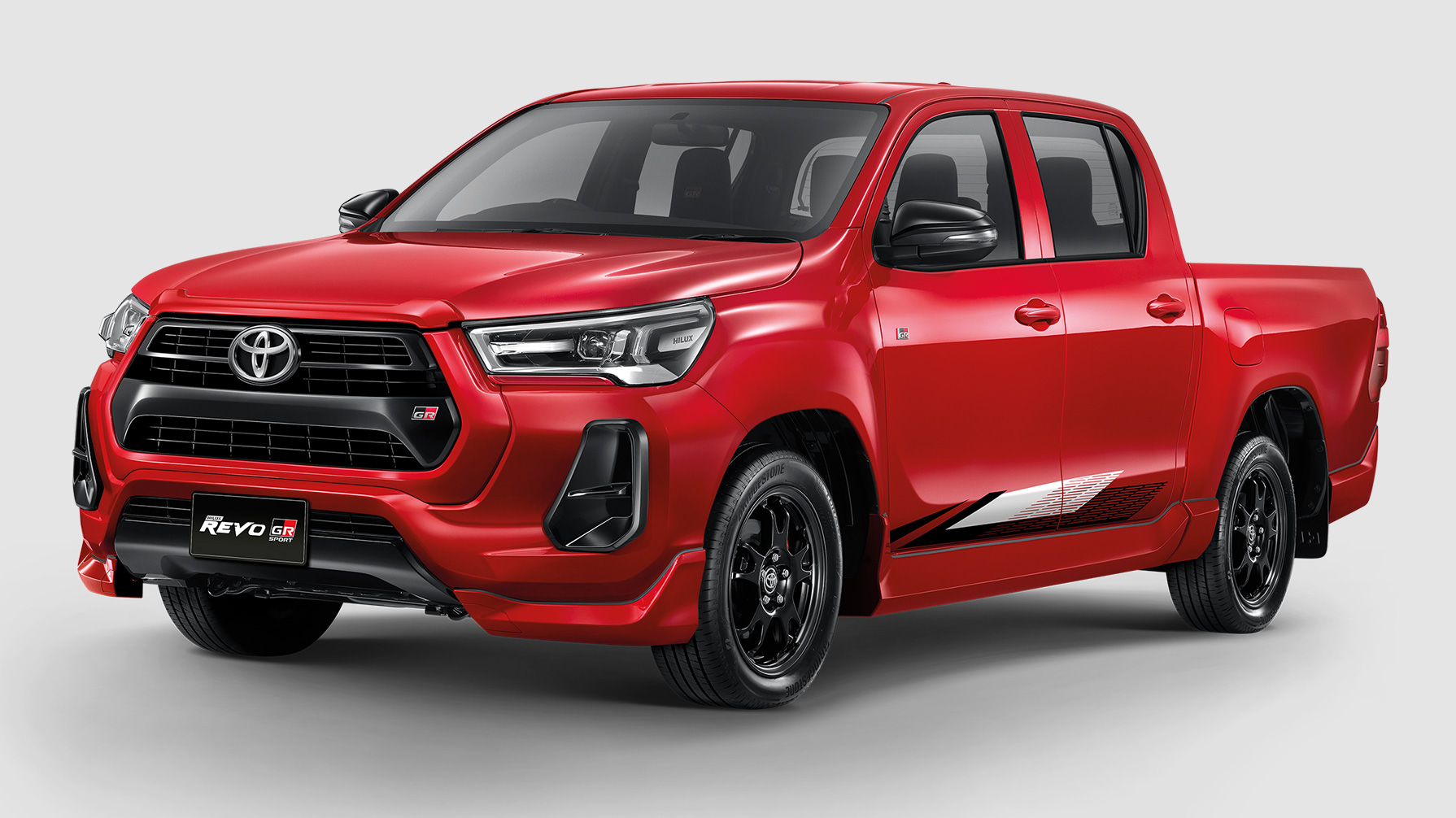
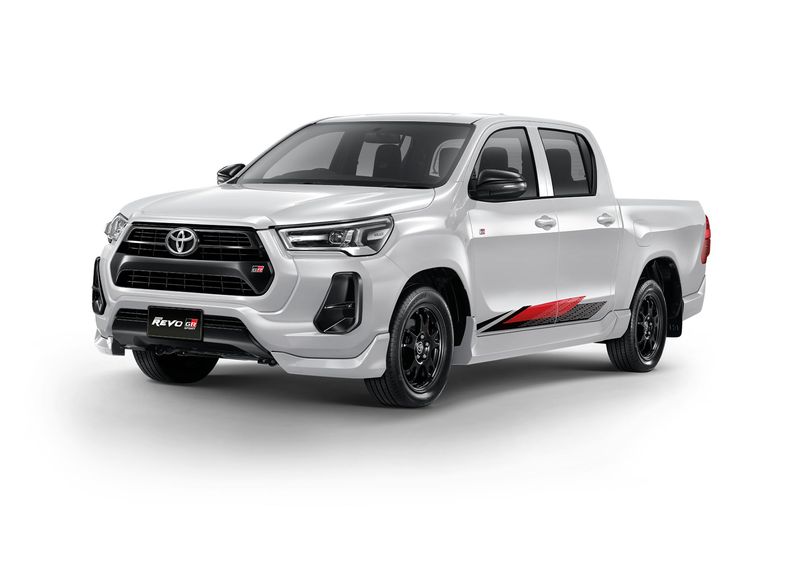
The Toyota Hilux GR Sport is back for another round, with the latest version having been revealed in Thailand on Wednesday, and falling into line with the bakkie’s recent facelift.

Although the new GR Sport has yet to be confirmed for South African introduction, it's probably more likely than not that we’ll see a new version of the sporty Hilux grade, given recent rumours that it’s set to become a global model.

The new Toyota Hilux GR Sport 4x4 model follows a similar recipe to the previous version that was launched in South Africa in 2019. It features a GR-badged grille with Toyota block-lettering, as well as model-specific 18-inch alloy wheels, unique rear sports bar, wheel arch decorations and black/red GR stickering on the side and tailgate.

Interestingly, in addition to the regular Hilux GR Sport 4x4 model, the Thai division is also offering a low-riding 4x2 variant, complete with 17-inch alloy wheels with low profile rubber, which look too small for the wheel arches. The 4x2 version also features front, side and rear skirts and the adjustable suspension has been lowered by 23mm to give it a ground-hugging stance. Perhaps one for the drift scene?


Hilux 1.jpegHilux 2.jpegHilux 3.jpegHilux 4.jpegHilux 5.jpegHilux 6.jpegHilux 7.jpeg
 
Toyota Hilux GR Sport breaks cover with height-adjustable suspension!

The Toyota Hilux GR Sport seems to have returned to the Thai market, with two styling derivatives this time. Like the previous model, additions to this trim are merely cosmetic with a more comprehensive list of standard features.

The Thai-arm claims that the new Toyota Hilux GR Sport is a tribute to the motorsport community and assures that the two models have undergone changes under the watchful eye of Toyota Gazoo that will appeal to consumers who want a professional experience from behind the wheel. The GR Sport is further described to be a product that defines the spirit of sport, thanks to technology that has been developed by performance arm’s experts while working on the track.

So, what design elements have been added to the new Toyota Hilux GR Sport? From the rear quarter, a shark fin antenna, black sports bar and 18-inch alloy wheels with red brake callipers can be noticed while the front quarter shows off a new black grille, wheel arch decorations and unique design stickers.

For the 4×2 Toyota Hilux GR Sport, unique sticker designs, 17-inch alloy wheels with red brake callipers, LED head- and taillamps an all-around skirt and a shark fin antenna have been fitted.


Hilux 1.jpegHilux 2.jpeg
 
Toyota's Super GT-Inspired Rear-Wheel-Drive 'Lo-Floor' Hilux Is The Weirdest Truck You'll See All Week

The Hilux Revo GR Sport 'Lo-Floor' and 'Hi-Floor' are the latest 'Yota pickups we can't have.

I’m no truck connoisseur, but it has always amazed me that the Toyota Hilux — the international byword for indestructible, ubiquitous utility — isn’t a thing in the biggest market for pickups in the world. Instead, we have the Tacoma and Tundra, made-for-North America trucks.

Anyway, the Hilux’s absence from this market feels especially painful today because of the two snazzy new Gazoo Racing-flavored versions of the truck Toyota has just announced for Thailand. The package is called the Revo GR Sport it comes in “Lo-Floor” and “Hi-Floor” versions. The ad for it makes me feel like I’m on drugs, with its gratuitous snap cuts and screaming.

The one up top certainly does look like a sporty truck, in the same way every sporty truck does. It rides high, there are running boards and black plastic cladding on the lower grille — it’s got the usual stuff.


Thai-Built Toyota Hilux Revo GR Sport Shows Potential​

What’s special about the Hilux Revo GR Sport?​


The low-rider Hilux Revo GR Sport is rear-wheel-drive and Toyota has fitted 17-inch wheels with red brake callipers but dropped the suspension by 23 mm to give it that low-rider look. A sporty, beefed-up body kit is fitted with a body-coloured grille surround and a gloss black finish for the air intake surrounds. A GR Sport wouldn’t be complete without its badges and GR Sport decals…

As for the high-riding Hilux Revo GR Sport, it features all-wheel-drive capability with a rear differential lock and its suspension has been upgraded with a reinforced Superflex Suspension which makes it more adept to tackling offroad conditions than its low-riding sibling. IT makes use of larger 18-inch wheels and is also differentiated with a larger grille. The lower bumper also features integrated fog lights and underbody protection while side steps and wheel arch extensions further add to the rugged appeal. Towards the rear, a sports bar is also fitted and the model also gains mud flaps.

Both variants can be had in 3 body colours including black, white and red.

The interior features a sporty look thanks to red stitching seen on the GR-embossed suede-leather combination seats as well as the sports steering wheel with red marking and aluminium pedals The GR start-stop button adds to the interior drama while the familiar 8-inch infotainment screen takes care of entertainment and key in-car functions.

In terms of engine power, the Hilux Revo GR Sport is equipped with Toyota’s updated 2.8-litre turbodiesel engine that now offers 150 kW and 500 Nm and comes mated with a 6-speed automatic transmission.


SA tuner unleashes Toyota Hilux V12 twin-turbo bakkie with 402kW​


It wasn’t too long ago that Quentin Boylan stunned the bakkie fraternity with an AMG V8-powered Toyota Hilux, but now a customisation company in Knysna has decided that what the popular Japanese bakkie was really begging for all along was a twin-turbo V12!

Enter the Toyota Hilux V12 by FatBoy Fab Works. Created ahead of the recent Simola Hillclimb, where it also competed, the previous-generation Hilux single cab is fitted with a 5.0-litre V12 engine, which was used in the Japan-only Toyota Century luxury sedan.

In its standard, normally aspirated state, the 1GZ-FE V12 petrol engine only makes around 200kW as it’s designed for smoothly-delivered low-down torque, but to give the modified Hilux a proper performance edge, FatBoy Fab Works stripped it down and rebuilt it, complete with two Garrett GT35 turbochargers and a Spitronics engine management system, as reported by Double Apex.

The team decided to retain the four-speed automatic gearbox, which pairs with the V12 in the JDM Century, but they did fit a custom propshaft and various suspension upgrades.

According to Francois Fritz, owner of FatBoy Fab Works, the modified Toyota Hilux V12 now produces a wholesome 402kW and 970Nm.

It also happens to be for sale, with offers starting at just R380 000.


66FE5FFA-E83F-42EC-AFF9-8A2B58DF20CD.jpeg9F86A66D-AD68-4470-974C-7A7CF0A93EE4.jpeg
 
402 kW Twin-turbo V12 Toyota Hilux takes to Simola Hillclimb

When someone mentions the Toyota Hilux, it is highly unlikely that “Hill Climb Monster” or anything to do with performance for that matter, comes to mind…

FatBoy Fab Works, however, see the Hilux in a different light, and as such, they decided to purpose build a Hilux for the 2021 Simola Hillclimb. How do you turn a trusty workhorse/lifestyle product into a rip-snorting racer? Shoehorn a twin turbocharged V12 under the bonnet, of course…

Between 1997 and 2017, Toyota produced the second-Generation Toyota Century, their answer to the Mercedes-Benz S-Class and BMW 7 Series. Offering the best that Japan has to offer in the way of automotive luxury, the Century was powered by Japan’s only production V12, the legendary 1GZ FE.

And so, the 1GZ FE would prove to be the perfect powerplant for FatBoy Fab Works’ Hillclimb Hilux, especially with the addition of two Garrett GT35 turbochargers.

The final product is 402 kW and 970 N.m from the 5,0-litre V12, mated to the Century’s four-speed automatic gearbox. In addition to this, the brakes and suspension have been uprated and a custom propshaft installed.

 
Toyota Hilux vs Ford Ranger: Here’s which bakkie sold the most in August ’21

The month of August came to a conclusion three weeks ago but we finally have results for the double-cab bakkie race in South Africa with regards to the Ford Ranger and Toyota Hilux specifically. The information is based on what has been reported by Lightstone Auto.

Including the double-cab, extra-cab and single-cab body configurations, Lightstone confirms that the Toyota Hilux continues to lead the race with a total sales figure of 3 346 units while the Ford Ranger paces behind with a figure of 1 317 units.

The sales driver for the Toyota Hilux once again was the double-cab variant with a figure of 1 732 units sold. This was followed by the single-cab boasting a result of 1 055 units and the extra-cab with 548 units. The Ford Ranger’s most popular bodystyle was the double-cab as well with a reported sales figure of 1 059 units while the single- and extra-cab sold 106 and 152 units respectively.

Year-to-date, the Hilux is well in the lead with a total of 25 989 units reportedly sold. The Ranger challenges this with a result of 14 451 units.

With a combined sales figure of 933 units of August 2021 is Isuzu D-Max which sold 618 double-cabs, 665 single-cabs and 48 extra-cabs. The year-to-date figure for this model is reportedly 10 380 units.


Next-generation Toyota Hilux and Tacoma to become one bakkie offering?​


In an attempt to consolidate production and development costs, a new report out of the USA suggests that the next-generation Toyota Hilux and Tacoma could become one in the same product. While the badges will remain the same in their respective markets, these two iconic bakkies, as well as their SUV counterparts, are understood to soon make use of a variation of the Japanese manufacturer’s TNGA platform.

Based on inside information sourced by Motor Trend, the next-generation Toyota Tacoma and 4Runner are rumoured to share the Toyota Hilux and Fortuner’s frame, suspension and components as well as some of the powertrains. The American publication highlights that the benefit of the ladder frame setup is the freedom to bolt any cab of body one would desire. This means that each specific product can adopt elements that are specific to their markets. This means that while the next Toyota Hilux and Tacoma will be mechanically identical, the will remain visually distinctive.

A similar strategy has been seen with the recently revealed Toyota Tundra and Land Cruiser 300 which both employ a common ladder frame with different lengths. Both of these models now employ a MacPherson front and five-link rear suspension with front coils and a rear live axle. The twin-turbocharged 3,5-litre V6 petrol engine with the 10-speed automatic transmission is shared as well.


DE951156-4DFC-42E1-A5F9-739C8DC8312F.jpeg
 
Top
Sign up to the MyBroadband newsletter
X