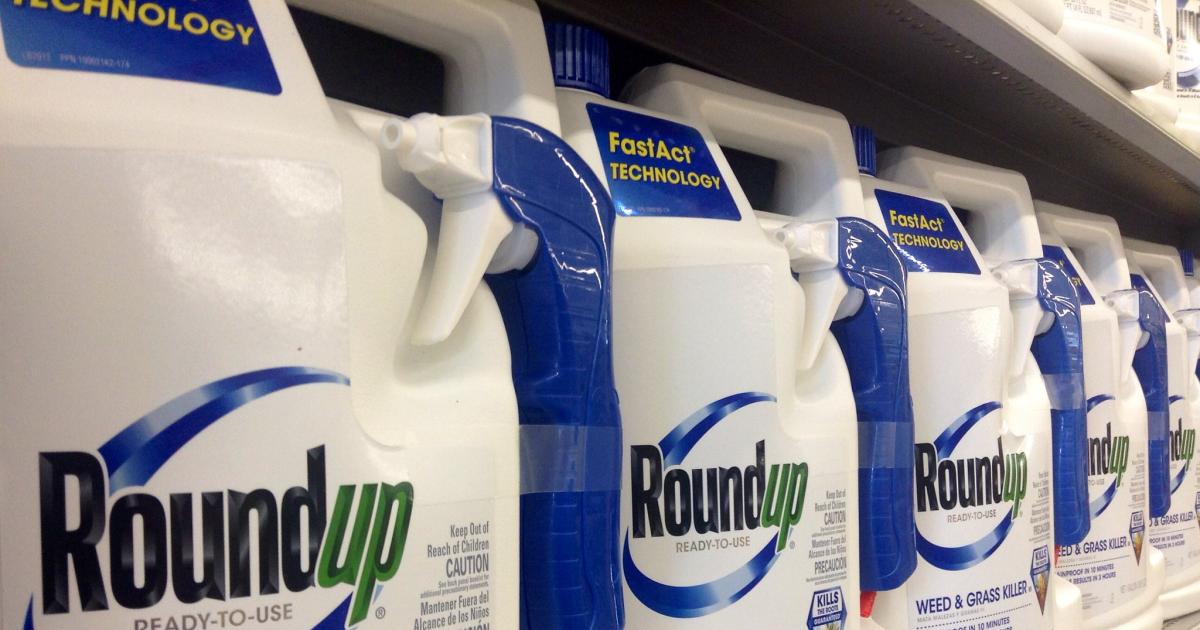
Weeds between paving Help

Roundup is banned in a ton of countries due to cancer linkage - yet everyone this thread - ROUNDUP ADD MORE ROUNDUP!!!!! :ROFL::X3:
In a commercial application where you are exposed to huge amounts a lot of the time maybe. Squiting a few weeds at home the risk is minimal if not non existent.
 
It's not just about that - it stays in soil for months, gathers in water runoff, kills a ton of beneficial insect life etc etc. Humans we've solved todays problem, **** tomorrow - who cares (tm).

¯\_(ツ)_/¯

Lol the planet has been around for 4 billion + years. A little roundup is not going to make a dent in anything.
 
Ive read that coarse salt can fix this if you dont want to use a poison...

Salt leaches into the groundand essentially sterilizes it, preventing vegetative re-growth. Spread a thin layer of rock salt between your walkway's bricks, pavers or stones. It will kill any weeds or grass growing there, and keep them away for years. Apply rock salt to cracks and crevices in your pavement or driveway.
Please try this instead of roundup.
 
I've had success with Roundup.
I've had success with paving laid on >300 micron sheets (will eventually need Roundup when it perishes)

I've had very little success with anything other than the above.
 
It isn't? Tell that to the tens of thousands of claimants who were paid $10 billion two years ago.

Same country where a lady sued Mcd for hot coffee

One study showed it did but it was flawed
"We found that these authors inappropriately employ a deductive reasoning approach based on syllogism. We found that their conclusions are not supported by the available scientific evidence. Thus, the mechanisms and vast range of conditions proposed to result from glyphosate toxicity presented by Samsel and Seneff in their commentaries are at best unsubstantiated theories, speculations, or simply incorrect."
So of course places like Mercola, green news jumped on this study and politicians do what they do best and not follow the science and go with what the 'public' wants.
 
It's not just about that - it stays in soil for months, gathers in water runoff, kills a ton of beneficial insect life etc etc. Humans we've solved todays problem, **** tomorrow - who cares (tm).

¯\_(ツ)_/¯

Cause it doesn't do any of that stuff.
 
I've had success with Roundup.
I've had success with paving laid on >300 micron sheets (will eventually need Roundup when it perishes)

I've had very little success with anything other than the above.
The other guys sound like they are just making food
 
Yeah, it works but agree, i'm not a fan. My neighbour's gardiner was out using it one day - no mask, wind blowing gales... eish man. I believe the active ingredient was banned in the US.
Nope it was not banned in the US.
 

Short-term exposure to glyphosate isn’t something you need to worry much about. Experts say it’s less toxic than table salt. But it’s long-term risk may be a concern. Scientists are divided on how much risk is involved. Reports show conflicting results. And keep in mind that most studies involve animals, not people:

  • Cancer. Some studies suggest glyphosate may be linked to cancer. Others suggest there’s no link. It’s a controversial topic. The International Agency for Research on Cancer categorizes glyphosate as a probable carcinogen for humans. In 2020, the EPA released a statement that glyphosate does not pose a risk to humans as long as it is used according to directions. They also stated that it is unlikely that it causes cancer in humans.
  • Liver and kidney damage. Glyphosate may affect your kidney and liver. Studies of dairy cows eating a diet of soybeans with high levels of glyphosate had higher risks of liver and kidney damage.
  • Reproductive and developmental issues. The EPA released a statement in 2020 that there was no evidence that glyphosate interfered with the endocrine system or hormones humans.
  • Risk for pregnant women and children. Some scientists are concerned that pregnant women and children may have higher risks because children and developing fetuses may be more susceptible to carcinogens. But the EPA says there’s no evidence that glyphosate is a developmental or reproductive toxin, so they don't feel that they are at any higher risk.
Yeah... maybe not that dangerous after all for occasional home use (while not windy)...
A whole bunch of buts and maybes there.
 
Top
Sign up to the MyBroadband newsletter
X