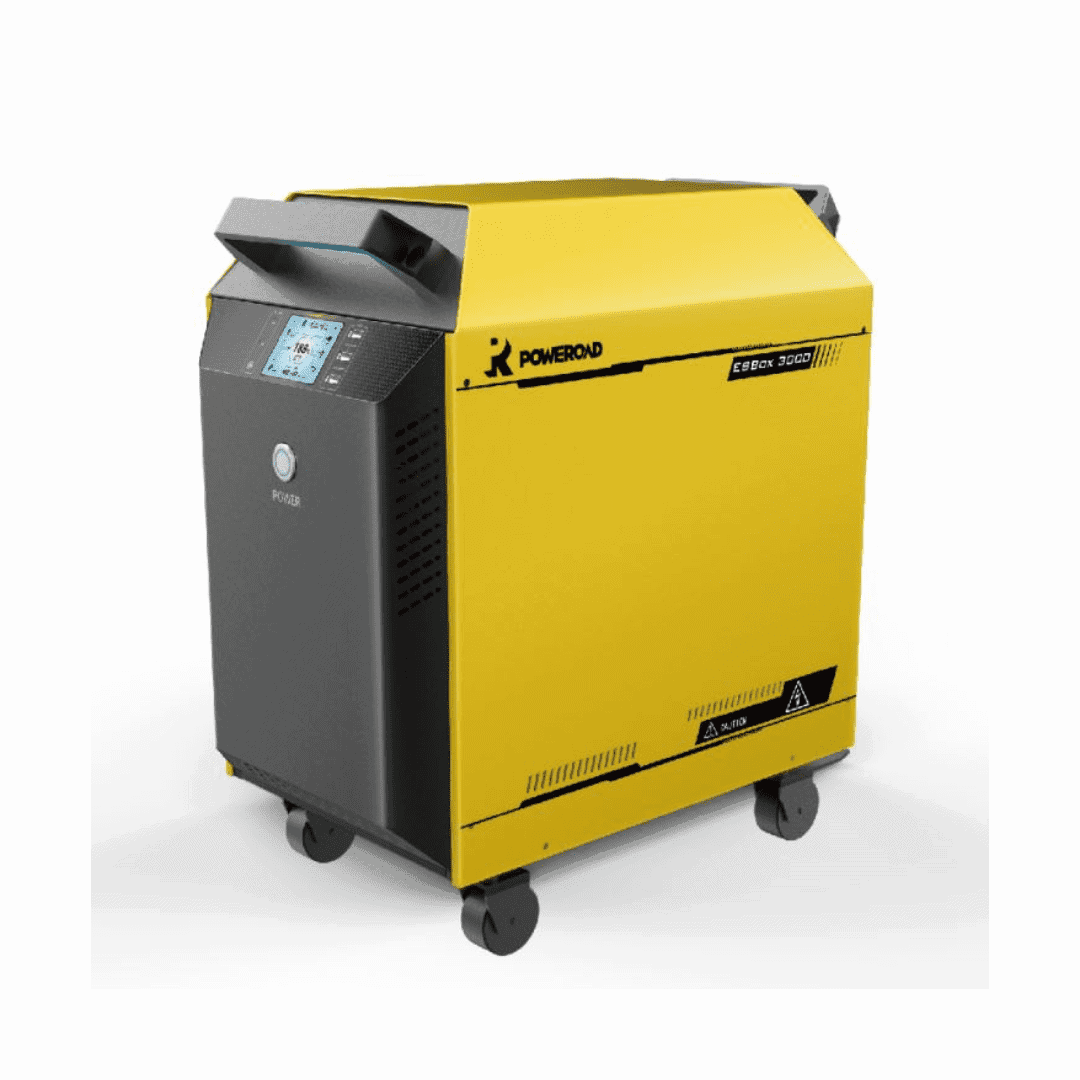
Portable Power Stations

Any of these capable of running blenders/mixers etc. Business is suffering, so just need a short term solution, that could power those appliances.
Not really, blenders are high wattage so would quickly drain it. Also motors want pure sine.

So you'd want something with bigger storage capacity and pure sine output.
 
So? If only 60% of the power coming out the battery is converted into watts then when it recharges it needs to charge 40% more than it used. Also, add inverter running load and charging efficiency of 95%.

If you change to an inverter with power factor of 1 then the 2 sonoffs will be much closer imho, maybe 10% off.
That's not how energy works. Power factor / reactive power is NOT energy. AC Volts X amps is not the same as watts... Once you look deeply.

It could be this inefficient particularly at low loads.
So say you use 100Wh over 4 hours (25W), and inverter hums along at 10W, then would need 140W to get 100W out.

Could you give us the actual numbers rather than the ratio? And model of inverter?

I'm going on my axpert/powerup 3kVA myself next week. 3 checks for me:
1. Power into inverter -- killawatt on plug in
2. Power out inverter -- killawatt on inverter plug out
3. Power out batteries -- DC power meter

I might try to put proper single phase smarter meters on 1 and 2 to be sure the killawatt gets non sine wave watts right
 
I'm going on my axpert/powerup 3kVA myself next week. 3 checks for me:
1. Power into inverter -- killawatt on plug in
2. Power out inverter -- killawatt on inverter plug out
3. Power out batteries -- DC power meter

I might try to put proper single phase smarter meters on 1 and 2 to be sure the killawatt gets non sine wave watts right
This is the part I'm talking about.

If an inverter has a power factor of 0.6 and is outputting 100W, is it not drawing 166VA (100/0.6) from the battery? What is a VA?
 
That's not how energy works. Power factor / reactive power is NOT energy. AC Volts X amps is not the same as watts... Once you look deeply.

It could be this inefficient particularly at low loads.
So say you use 100Wh over 4 hours (25W), and inverter hums along at 10W, then would need 140W to get 100W out.

Could you give us the actual numbers rather than the ratio? And model of inverter?

I'm going on my axpert/powerup 3kVA myself next week. 3 checks for me:
1. Power into inverter -- killawatt on plug in
2. Power out inverter -- killawatt on inverter plug out
3. Power out batteries -- DC power meter

I might try to put proper single phase smarter meters on 1 and 2 to be sure the killawatt gets non sine wave watts right
attached the datasheet for the unit and recorded consumption before and after the UPS
 

Attachments

  • Clipboard02.jpg
    Clipboard02.jpg
    169.6 KB · Views: 46
  • Clipboard01.jpg
    Clipboard01.jpg
    547 KB · Views: 48
attached the datasheet for the unit and recorded consumption before and after the UPS
1000W/1500VA=0.66 power factor. (44%)
LFP battery is 95% efficient when recharging. (5%)
Inverter load. (5%?)
 
This is the part I'm talking about.

If an inverter has a power factor of 0.6 and is outputting 100W, is it not drawing 166VA (100/0.6) from the battery? What is a VA?
No the DC end is 100% power factor.

There's only power factor on AC. The power factor is to adjust for it's being 220V really it's fluctuating between 315 and 0 -- 220v is the root-mean-squared of the volts. The average volts on AC is 0V
 
No the DC end is 100% power factor.

There's only power factor on AC. The power factor is to adjust for it's being 220V really it's fluctuating between 315 and 0 -- 220v is the root-mean-squared of the volts. The average volts on AC is 0V
Why do you think there is a 40% loss?
 
No the DC end is 100% power factor.

There's only power factor on AC. The power factor is to adjust for it's being 220V really it's fluctuating between 315 and 0 -- 220v is the root-mean-squared of the volts. The average volts on AC is 0V
something I'm still not quite clear about:
if a load has a 0.5 PF and V=230V, P=230W then I=2A
If I had an inverter with a 230V DC battery, what would the current drawn from the battery be?
 
Why do you think there is a 40% loss?
Probably because the inverter uses up energy to turn DC to AC. Those watts (assuming it was properly measuring watts) have to end up as heat. At the low end I could believe it. Just think it's got to run the fan, that's a "loss". On say a 2kW inverter though, I'd be concerned if it was losing 400W when feeding a 600W load. It would be getting bloody hot...

something I'm still not quite clear about:
if a load has a 0.5 PF and V=230V, P=230W then I=2A
If I had an inverter with a 230V DC battery, what would the current drawn from the battery be?

So the DC end would be 1A with perfect efficiency. Or at a more reasonable 90% efficiency would be 1.11A

Power factor is not efficiency. (The volts and amps are not energy... They match it when PF is 1. See linked article below)

Those V are different. One is "230V AC"... I.e. a wave going from 315 to 0 then to -315. Work is done along that wave form depending on how the device pulls the energy -- e.g. a heating element, all the time -- a switch mode PSU in microsecond pulses.
For the the heating element the power factor is 1. I.e. it takes the energy all along the wave form; for the switch mode psu which is snipping but of energy here and there, it can be 0.3 or 0.1... but that doesn't mean you don't need the amps, and it doesn't mean you use more watts.

Why inverters make this much complicated is when they aren't pure sine waves. So most stuff is built to not be too bad power factor with a sine wave -- is going to be all over the place with a square wave.
(Not for efficiency but for not needing too many amps to do the same work)

Btw this is advanced electrical stuff guys, so don't expect it to be simple. It's literally about sine waves (so trigonometry) and work done by electricity etc. You need to use complex maths (using sqrt of minus 1) to do calculations with it.

This is a better explanation than what I can give.
Answer to What's the physical meaning of reactive power? by William Beaty https://www.quora.com/Whats-the-phy...id=22200627&share=7c4299db&target_type=answer
 
attached the datasheet for the unit and recorded consumption before and after the UPS
Interesting.

Given that your monitoring total usage both sides -- this would even include 14 hours+/day of bypass?
Ah, no, it's a UPS not an inverter with bypass... So it's always going into batteries then back out.

Do me one favour. Swap the sonoffs around. And do you get the same result .. they could just be off (they aren't calibrated IEC meters like your electricity meter remember!)

I'm going to order my DC meter now now. Already have 50 single.phase beauties in the office.
 
Interesting.

Given that your monitoring total usage both sides -- this would even include 14 hours+/day of bypass?
Ah, no, it's a UPS not an inverter with bypass... So it's always going into batteries then back out.

Do me one favour. Swap the sonoffs around. And do you get the same result .. they could just be off (they aren't calibrated IEC meters like your electricity meter remember!)

I'm going to order my DC meter now now. Already have 50 single.phase beauties in the office.
thanks for your inputs!
I've ordered another Sonoff Elite (have one on UPS input, in series with older PWR2) that I will add to the UPS output, in order to get hourly data of both input and output - should be better comparison.
I will also then swop the old PWR2 around from in/out.
I'm also planning to do a test with a purely resistive load (heater), but not up to it in the present weather.
I have an infra-red camera and could use it to see where power (heat) is wasted

This bugs me quite a bit, as I was bargaining on losses <10%
 
This bugs me quite a bit, as I was bargaining on losses <10%
Unfortunately I think this is the main difference between a UPS and inverter.
inverter = bypass when grid is there (0 losses) and when running somewhat built for efficiency
UPS = built for reliability -- no drop not even for 10ms. Efficiency less important.
 
Interesting.

Given that your monitoring total usage both sides -- this would even include 14 hours+/day of bypass?
Ah, no, it's a UPS not an inverter with bypass... So it's always going into batteries then back out.

Do me one favour. Swap the sonoffs around. And do you get the same result .. they could just be off (they aren't calibrated IEC meters like your electricity meter remember!)

I'm going to order my DC meter now now. Already have 50 single.phase beauties in the office.
Surely it has a transfer time meaning it's bypassed? Online UPS has no transfer time.
 
Surely it has a transfer time meaning it's bypassed? Online UPS has no transfer time.
Yup sorry didn't see that (it's a "line interactive" not online).

Well that means assuming it's just a contactor when grid is there (assuming 100% efficiency!) the efficiency when actually charging and discharging must be even lower than suggested.

Could be right, but given that does sound extraordinary, it's worth double checking the instruments :)
 
Unfortunately I think this is the main difference between a UPS and inverter.
inverter = bypass when grid is there (0 losses) and when running somewhat built for efficiency
UPS = built for reliability -- no drop not even for 10ms. Efficiency less important.
I'll also test it in Inverter mode setting.
I'm assuming it will switch over from incoming AC to battery created AC in a couple of milli secs on it's own?
So only difference is a small dip (inverter) as opposed to no dip at all (UPS)?
Will have to see how PVR and TV like that.......
 
I'll also test it in Inverter mode setting.
I'm assuming it will switch over from incoming AC to battery created AC in a couple of milli secs on it's own?
So only difference is a small dip (inverter) as opposed to no dip at all (UPS)?
Will have to see how PVR and TV like that.......
TV should be fine, enough capacitors etc to not realise.
Remember anything on AC is used to voltage going up and down at 50Hz -- i.e. every 10ms (1/50 / 2 [?]) it passes through zero.
 
Any of these capable of running blenders/mixers etc. Business is suffering, so just need a short term solution, that could power those appliances.

The Ecoflow Delta can do up to 1800w surge if I remember correctly.
 
Last edited:
The Ecoflow's are aroudn 80% efficient based on testing done by reviewers. The new line seems to be slightly worse at something like 76-ish%.
 
The Ecoflow's are aroudn 80% efficient based on testing done by reviewers. The new line seems to be slightly worse at something like 76-ish%.

Lithium-iron-phosphate is probably a little less efficient but offers higher cycles and is supposedly safer in terms of heat and explosion risk.
 
Top
Sign up to the MyBroadband newsletter
X