The Nio (EV Brand) Thread

Nio unveils own LiDAR chips and battery packs

Nio is having a very busy month - first, it was the unveiling of the brand new Nio EC6, an event in its own right. The EC6 already looks like a runaway success with orders pouring through and deliveries already being pushed back by 3 to 4 weeks. Not deterred, Nio finally pulled the curtain back on the Nio Phone but during the event, there were a couple of nuggets - Nio's own LiDAR sensor and in-house developed large cylindrical battery cells.

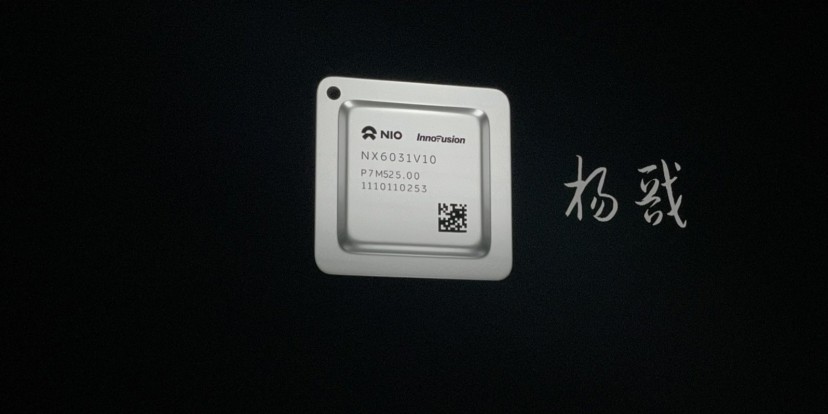
At the NIO IN2023 Innovation Day event in Shanghai, William Li, the visionary founder of Nio, proudly announced the naming of their self-developed NX6031 LiDAR control chip as "Yang Jian". While the name evokes its unique role within vehicles, the real story is the chip's performance. Although it may not be topping the charts in technical specifications, it represents a balance between reduced power consumption (by 50%) and cost efficiency.

Unfortunately, Nio's CEO kept the presentation brief and there weren't too many details about the new chip. Jump back to 2022, NIO, not a company to back down from a challenge, showed its mettle in the face of skepticism from tech giant Nvidia. At the heart of the matter was the timely introduction of Nvidia's Drive Orin solution. Despite Nvidia’s reservations, Nio, through collaboration, managed to beat expectations and swiftly incorporated Nvidia's tech into its ET7 sedan. The result? A supercomputer, dubbed "Adam," capable of delivering a staggering 1,016 TOPS (trillion operations per second), an essential feature for advanced driver assistance and autonomous driving.


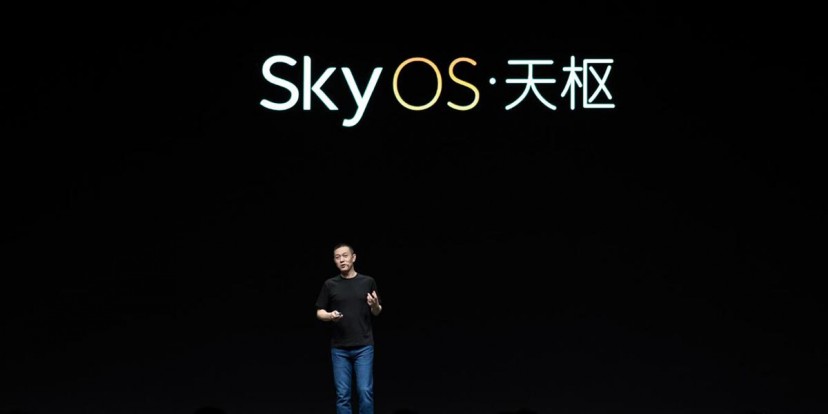
Nio debuts SkyOS operating system and in-car App Store for its EVs

In the ever-evolving landscape of electric vehicles, Nio is yet again making waves with its latest innovative unveilings. The China-based EV automaker showcased its groundbreaking SkyOS, dubbed as China's first operating system for smart electric vehicles, and introduced an App Store explicitly designed for its vehicle's smart cockpits. These advancements were revealed at the Nio IN 2023 Innovation Day event in Shanghai, marking a significant stride in enhancing user experience and vehicle connectivity.

SkyOS - a glimpse into the future of EV tech

SkyOS stands out as Nio's comprehensive domain operating system, forming a unique "1+4+N" technology cluster. This system encompasses vehicle control, intelligent driving, cockpit, mobile connectivity, and much more, setting a new standard in the EV industry. The cluster is designed to support multiple operating system requirements, ensuring a secure and reliable base for both the cockpit and autonomous driving domains.

 
The Chinese Government Is Subsidizing Nio’s $35,000 Loss On Every Car Sold

Electric vehicle maker Nio lost $835 million between April and June this year, but Chinese government subsidies keep it from going under

Electric cars are expensive to buy, but that doesn’t stop automakers from losing thousands on each one they sell. And while most startups find themselves scrounging for cash to cover their losses and stay afloat, Nio instead turns to the Chinese government.

Earlier this week, it was reported the Rivian loses $33,000 on every truck that rolls off its factory floor. A few days later, it announced a bond sale to try and raise an additional $1.5 billion to plow into its reserves. On the other side of the world, Chinese automaker Nio is on a similar losing streak.

Now, a report from the New York Times has found the secret to the company’s longevity in spite of its mounting losses: Chinese government subsidies. According to a new report from the outlet, companies like Nio are being kept afloat by government backing that “allows them to withstand such losses and keep growing.” As the Times reports:

It has invested so extensively in robots that one of its factories employs just 30 technicians to make 300,000 electric car motors a year. Nio offers $350 augmented reality glasses for each seat in its cars, and has introduced a cellphone that interacts with the car’s self-driving system.

And none of it is profitable — far from it. Nio lost $835 million from April through June, or $35,000 for each car it sold.

 
Report: Nio loses $35,000 per car, has lost $835 million in Q2

Nio has lost $835 million in Q2, a report by the New York Times estimates, which is around $35,000 per shipped car. Nio shipped around 8,000 EVs in that time.

The report cites China's government's "formidable" financial backing of its car companies as the reason they're as competitive, since they don't need to worry about profitability.

The European Union suspected as much and launched a probe into the matter. Should the EU conclude that the Chinese government is subsidizing its EV makers, it could impose a tariff to level the playground and protect its own auto industry.

When Nio nearly ran out of cash in 2020, the government immediately injected $1b in return for a 24% stake. Another $1.6b was invested by a state-controlled bank and a group of other lenders.

The NYT report goes on to outline Nio's large profile - it employs 11,000 people in research and development alone. Nio's investment into factory automation has allowed it to employ just 30 technicians to make 300,000 electric motors per year.

 
Here's why Nio and Polestar turn smartphone producers

When we think of car manufacturers, the image of shiny new vehicles and vast assembly lines comes to mind. Yet, a novel trend is sweeping through the automotive world, specifically in China – automakers are dipping their toes into the smartphone arena.

Nio surprised many by announcing its first smartphone model last month. A starting price of RMB 6,499 (approximately €829) gets you the Nio Phone, a top-tier Android device. This isn't just another smartphone. Nio emphasizes a holistic connection between the phone and its electric vehicles. Imagine a smart car key granting remote car control and an impressive suite of over 30 features – that's the Nio Phone for you.

Not to be outdone, Polestar, the Swedish electric vehicle brand, hinted at its intention to launch a premium smartphone in China come December. Its approach seems even more expansive. While Nio focuses on a single product, Polestar intends to stamp its mark on a broader spectrum of consumer electronics, including smartwatches. This aggressive strategy aligns with its vision of embodying a chic tech brand.

Market research firm Canalys shed some light on this unexpected turn of events in a recent research note. So, why are companies that traditionally produce vehicles suddenly interested in making calls? Two words: Brand Exposure. By manufacturing smartphones that flawlessly merge with smart cockpit systems, these automakers can cultivate their distinct ecosystems and curate unparalleled user experiences.

 
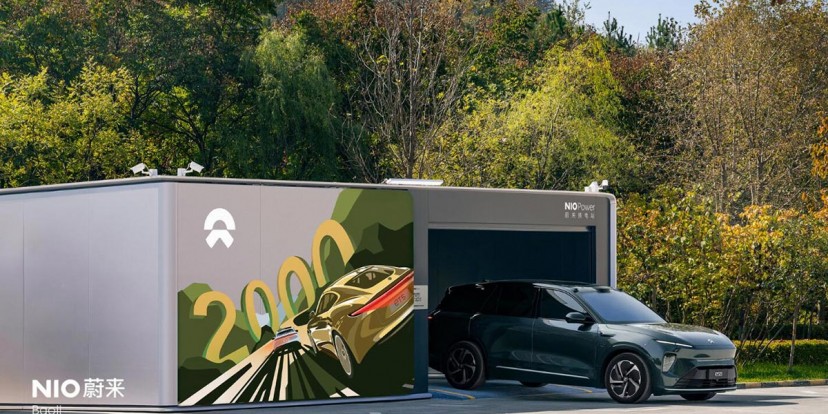
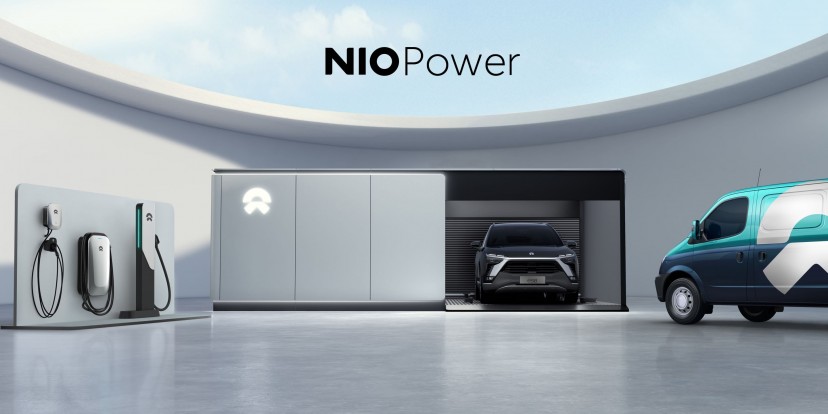
Nio opens 2,000th battery swap station in China

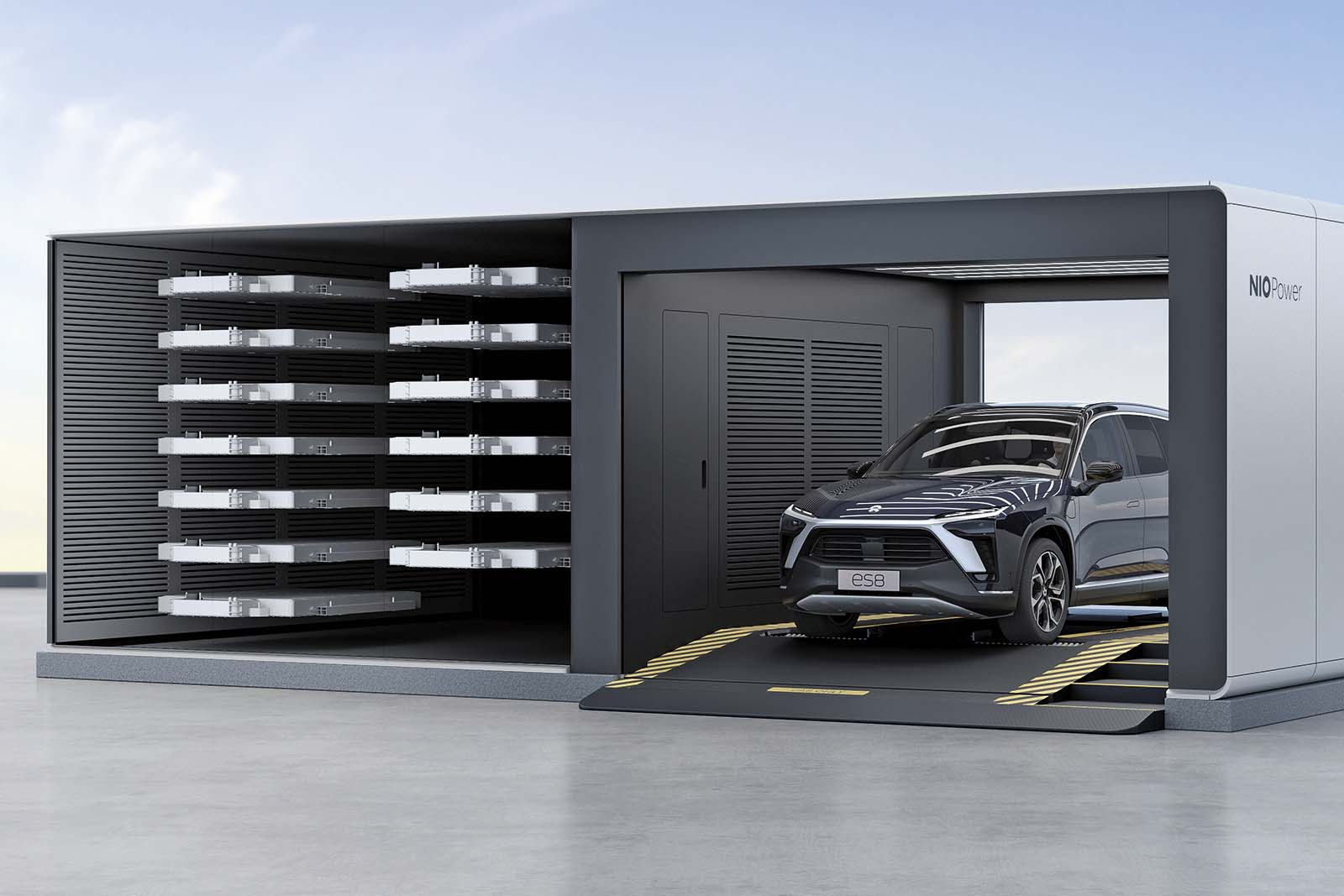
Electric vehicles are all the rage, but for many potential owners, the inconvenience of frequent and long charging sessions looms large. Nio, China's prominent EV company, takes a different approach with its expanding network of battery swap stations. It's not about plugging in anymore, it's about swapping out.

Nio just reached a significant milestone, inaugurating its 2,000th battery swap station in China. Located at the Baoji West service area on the G30 Lianyungang-Khorgos highway.

With this achievement, Nio inches closer to its ambitious target of establishing 2,300 swap stations by the year's end. That compares to a total of 1,300 station that the company had by last year. For more perspective, it took the company from May 20, 2018, when it opened its first station in Shenzhen, until July 6, 2022, to reach its 1,000th station.

 
Second auto maker embraces Nio's battery swaps

Nio, a prominent player in the electric vehicle industry, has rekindled its ties with Changan Automobile to join its approach to EV charging. The two automotive giants have joined forces to share Nio’s existing battery swap network and further jointly develop it.

Nio decided to open its doors to the industry by collaborating with Changan Automobile on battery swap network sharing. The decision comes after Nio's earlier joint venture with Changan dissolved a few years ago. This newfound partnership aims to set industry standards for swappable batteries, expand a shared battery swap network, create more swappable EVs, and establish an efficient battery asset management system.

William Li, the founder, chairman, and CEO of Nio, expressed his enthusiasm for this venture, stating, "As Nio started battery swap from the very beginning, it has been ready to open up its technologies and infrastructure to the entire industry." He likened Nio's approach to that of internet companies providing cloud services, emphasizing the importance of developing infrastructure and validating services before opening them to others.

After five years of development, Nio has accumulated vast experience in building and operating battery swap stations. Now, it is poised to share this expertise with the broader industry, offering an alternative to charging stations.

Changan Automobile, on the other hand, is a major player in the Chinese automotive market and has shown strong determination and execution in its electrification efforts. Zhu Huarong, chairman of Changan, emphasized the significance of this partnership in China's new energy vehicle industry, stating, "The partnership between Changan Automobile and Nio on battery swap is of great importance, contributing to the high-quality development of China's new energy vehicle industry."

 
Nio achieves independent vehicle production, poised to buy JAC assets

Chinese electric vehicle manufacturer Nio has been awarded independent vehicle production qualifications, signaling a new chapter in the company's journey. This allows Nio to produce vehicles under its own name, rather than relying on partner qualifications.

Nio, a prominent player in the world of electric cars, has long been producing its vehicles under the qualification of Anhui Jianghuai Automobile Group (JAC). However, the latest government filing reveals that Nio has now entered China's Ministry of Industry and Information Technology's Vehicle Manufacturing Enterprise Credit Information Management System, allowing independent production.

This development is not just a bureaucratic milestone; it has the potential to reshape Nio's manufacturing landscape and its impact on the electric vehicle industry.

For several years, Nio relied on JAC's qualifications for vehicle production. This arrangement saw Nio vehicles being manufactured at two factories in Hefei, China – the F1 plant, officially opened in 2018, and the F2 plant, commissioned in September 2022. However, the Chinese government requires local automakers to have qualifications issued by the National Development and Reform Commission to produce vehicles under their own brand names. Nio, until now, lacked such qualifications.

 
Nio to spin off battery unit

Nio, the Chinese electric vehicle manufacturer, is preparing to sell its battery manufacturing unit. The decision comes as part of Nio's strategy to enhance its profitability, streamline operations, and compete more effectively in the fast-paced world of electric cars.

According to a recent report by Reuters, Nio is planning to spin off its battery manufacturing unit by the end of this year. This bold step is seen as a way for the company to attract external investors and streamline its operations further. The valuation of this new entity will be determined at a later date, once external investors are on board.

The move is indicative of Nio's commitment to achieving profitability as fast as possible. While the initial plan was to produce batteries internally, the company now appears to be shifting towards outsourcing production to reduce costs.

As part of the spin-off, Nio intends to transfer top engineers from its battery division to the newly formed company. Meanwhile, some employees will be integrated into Nio's other divisions to optimize efficiency.

This restructuring might be Nio's response to the growing demand for large cylindrical batteries, similar to Tesla's 4680 cells, which are projected to play a pivotal role in the EV industry. Nio aims to mass-produce these batteries in a new facility in China's Anhui province by 2025.

 
Nio to launch Europe-focused affordable EV brand imminently

Prototypes for new 'Alps' brand have been built ahead of a 2024 launch - and so have right-hand-drive Nio models

Nio has outlined plans for the establishment of two new electric vehicle brands – and says the first right-hand drive prototypes of existing Nio models have also been constructed.

Speaking to the media ahead of the Chinese car maker’s annual Nio Day presentation set to take place on 24 December, CEO William Li confirmed Nio had progressed its second “family car” brand to the point where construction of validation prototypes of its first model is now taking place.

Known internally under the Alps codename, it is among two additional brands planned by Nio as part of an expansion strategy aimed at taking it deeper into global volume markets, including Europe.

“It’s been over a month since the Alps VB [verification build] was completed. [It] is focused on the family market, which means product definition will be easier and clearer [than the Nio brand]. In contrast, high-end brands need to offer some emotional elements,” he said.

Li confirmed the brand being developed under the internal working title Alps will be revealed in 2024.

 
Nio will launch cheaper Firefly branded cars in Europe in 2025

Nio is already present in a bunch of countries in Europe, where it's selling a few of its models. The company has also started to build battery swapping stations in Europe, but it looks like its plans for the continent are even grander for the future.

Nio co-founder, president and director Lihong Qin, speaking in a news conference online earlier today, said his company will launch a cheaper brand, called Firefly, in Europe in 2025.

Both Firefly and Alps, its other sub-brand, are going to focus on producing cars for families, but Firefly will offer smaller models, he added. Unfortunately, he didn't go into any more details. Alps hasn't been confirmed to arrive in Europe.

 
Top
Sign up to the MyBroadband newsletter
X