Router Battery Backup

Calculate what you need first and then decide how much capacity you need to cater for and what to purchase.

Plenty of people go and buy an Ellies or Mecer inverter/charger with a single 105Ah lead acid battery and end up disappointed when it doesn't power their 300W gaming PC, 200W sound system, 300W plasma TV, LED lights, etc. for more than 2 hours.

They are even more disappointed when their R2500 lead acid battery dies after 6 to 12 months of use due to it being deeply discharged. 105Ah 12V lead acid batteries cost around R2000 to R3000 each.
The rule of thumb is do not discharge a lead acid based battery below 50% DoD (Depth-of-Discharge) if you want it to last. If you use lead acid batteries you need to have double the capacity than your equipment requires for a period of time.

Example:
1. Add up the power requirement of all your equipment in Watts. Let's say 200 Watts.
2. Multiply by the hours it needs to run for which gives Watt-hours (Wh). 200W * 4 hours = 800Wh
3. Take the battery voltage and multiply it by the Ah rating to get Watt-hours. e.g. 12V * 105Ah = 1260Wh
4. If you're using lead acid batteries you shouldn't discharge below 50% of capacity if you want them to last so that gives you a maximum of 1260Wh / 2 = 630Wh. This means you can run a 200W load for a maximum of 3.15 hours (630Wh / 200W = 3.15 hours) before reaching 50% DoD.
 
Calculate what you need first and then decide how much capacity you need to cater for and what to purchase.

Plenty of people go and buy an Ellies or Mecer inverter/charger with a single 105Ah lead acid battery and end up disappointed when it doesn't power their 300W gaming PC, 200W sound system, 300W plasma TV, LED lights, etc. for more than 2 hours.

They are even more disappointed when their R2500 lead acid battery dies after 6 to 12 months of use due to it being deeply discharged. 105Ah 12V lead acid batteries cost around R2000 to R3000 each.
The rule of thumb is do not discharge a lead acid based battery below 50% DoD (Depth-of-Discharge) if you want it to last. If you use lead acid batteries you need to have double the capacity than your equipment requires for a period of time.

Example:
1. Add up the power requirement of all your equipment in Watts. Let's say 200 Watts.
2. Multiply by the hours it needs to run for which gives Watt-hours (Wh). 200W * 4 hours = 800Wh
3. Take the battery voltage and multiply it by the Ah rating to get Watt-hours. e.g. 12V * 105Ah = 1260Wh
4. If you're using lead acid batteries you shouldn't discharge below 50% of capacity if you want them to last so that gives you a maximum of 1260Wh / 2 = 630Wh. This means you can run a 200W load for a maximum of 3.15 hours (630Wh / 200W = 3.15 hours) before reaching 50% DoD.

You can also minus about 15% from that figure owing to losses in the system (12/24VDC -> 220V -> 5/9/12V/24V/48V depending on your device that you need to power. The microUPS devices that output straight DC are of course a little bit more efficient than the 220V inverters, but none will ever be 100% efficient as you will always have losses
 
Hoping some of the experienced fellow forumites can offer suggestions.

I'm a complete noob at this and have no idea where to start or what to get and how to make this work.

With loadshedding becoming a part of our daily lives I need to have a way of keeping the internet up to ensure we don't completely loose our minds when the power goes out.

I have a fibre ONT, Ubiquiti EdgeRouter X, Ubiquiti Switch8 60W 8-port PoE switch, 2x Ubiquiti Unifi AP's connected to the switch via PoE, and a Raspberry Pi to keep running for at least 4 hours at a time (worst case) when loadshedding kicks in.

With up to 2 or 3 2.5hour loadshedding sessions per day (God forbid we have >Stage4, meaning 4-hour sessions at a time), the solution would either need to recharge the battery/ies fast enough, or have sufficient charge to run the equipment for long enough to cover multiple loadshedding sessions.

I would like to get something for as cheap as possible, that will get the job done reliably.

What do I need? Where do I start? How do I make this work?

Thanks!
Honestly, I read this whole thread twice (well, at least the first 10 pages) and watched a bunch of Youtube vids and now I finally more-or-less know what I need.
 
Hoping some of the experienced fellow forumites can offer suggestions.

I'm a complete noob at this and have no idea where to start or what to get and how to make this work.

With loadshedding becoming a part of our daily lives I need to have a way of keeping the internet up to ensure we don't completely loose our minds when the power goes out.

I have a fibre ONT, Ubiquiti EdgeRouter X, Ubiquiti Switch8 60W 8-port PoE switch, 2x Ubiquiti Unifi AP's connected to the switch via PoE, and a Raspberry Pi to keep running for at least 4 hours at a time (worst case) when loadshedding kicks in.

With up to 2 or 3 2.5hour loadshedding sessions per day (God forbid we have >Stage4, meaning 4-hour sessions at a time), the solution would either need to recharge the battery/ies fast enough, or have sufficient charge to run the equipment for long enough to cover multiple loadshedding sessions.

I would like to get something for as cheap as possible, that will get the job done reliably.

What do I need? Where do I start? How do I make this work?

Thanks!

The easiest solution would me an inverter with 100ah battery. I've got a similar setup and my setup made it through the day or two of stage 6 which we had last year. IIRC I had 4 x 2 hour outages in a 24 hour window and the battery didn't go below 50%.
 
Bought and connected a 9v router and 12v Vumatel CPE to a Ratel 430m Micro Dc-to-Dc UPS today. The unit only came with one Y cable , and bought another similar cable to accommodate the two devices of different voltages.

Chuffed , and uhm eagerly awaiting the first real loadshedding to see it in action - have tested it by switching off the wall plug and no problems.
 
My CCTV psu powering a Mikrotik router, my Fibre ONT and a Raspberry Pi running my home automation system unfortunately died during loadshedding yesterday.

Must have not had enough time to recharge batteries between two loadshedding sessions (from 1:00-3:00 and then again 9:00-11:00).

Unfortunately it is really bad for the Pi to just lose power - almost thought I had SD card corruption again.

Going to see if I can rig a wifi battery monitor today to safely shut down the Pi at certain battery levels (and then the mikrotik at critical levels afterwards).
 
Okay so the one I've gotten from Geewiz
Has pulled through all 4.3 load shedding, a 6 hour power failure and this morning 5.30 hour power failure powering both the ont and a planet router.
 
My CCTV psu powering a Mikrotik router, my Fibre ONT and a Raspberry Pi running my home automation system unfortunately died during loadshedding yesterday.

Must have not had enough time to recharge batteries between two loadshedding sessions (from 1:00-3:00 and then again 9:00-11:00).

Unfortunately it is really bad for the Pi to just lose power - almost thought I had SD card corruption again.

Going to see if I can rig a wifi battery monitor today to safely shut down the Pi at certain battery levels (and then the mikrotik at critical levels afterwards).
My Pi's go off all the time with no issue coming back on? No need to "Power off" a Mikrotik either, this is a well known fact. The OS won't magically go corrupt after a power failure. Why is our Pi so important that you can't have it going down?
 
My Pi's go off all the time with no issue coming back on? No need to "Power off" a Mikrotik either, this is a well known fact. The OS won't magically go corrupt after a power failure. Why is our Pi so important that you can't have it going down?
Pi SDs are notorious for going corrupt,some theorize specific write/flushes that don't complete properly
 
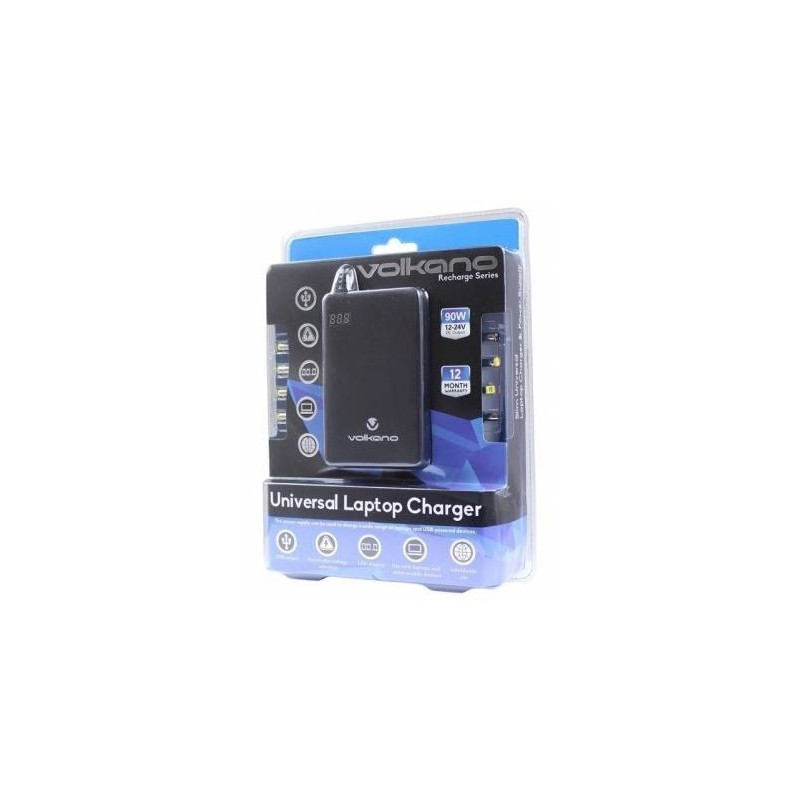
Going to get this


Looks a bit of a better quality than the usual Chinese job... 1yr warranty
Are you sure that one runs off 12V?
 
My CCTV psu powering a Mikrotik router, my Fibre ONT and a Raspberry Pi running my home automation system unfortunately died during loadshedding yesterday.

Must have not had enough time to recharge batteries between two loadshedding sessions (from 1:00-3:00 and then again 9:00-11:00).

Unfortunately it is really bad for the Pi to just lose power - almost thought I had SD card corruption again.

Going to see if I can rig a wifi battery monitor today to safely shut down the Pi at certain battery levels (and then the mikrotik at critical levels afterwards).

Are you still using the 7Ah battery that fits inside the UPS? I have mine hooked up to a 45Ah battery that come out of the UPS's at work, been using it for a few years now. Have been without power for more than a day, with no issues. With very extensive load shedding the battery may start falling behind since those UPS's can only charge at 2A or something.
 
Are you still using the 7Ah battery that fits inside the UPS? I have mine hooked up to a 45Ah battery that come out of the UPS's at work, been using it for a few years now. Have been without power for more than a day, with no issues. With very extensive load shedding the battery may start falling behind since those UPS's can only charge at 2A or something.

Yeah, except that I hooked two 7Ah batteries in parallel. But the charger is probably a bit too slow for the whole thing between 2 loadshedding periods.

I'm looking a going solar, so for now it will have to do.
 
Yeah, except that I hooked two 7Ah batteries in parallel. But the charger is probably a bit too slow for the whole thing between 2 loadshedding periods.

I'm looking a going solar, so for now it will have to do.

What would be a safe/good/recommended maximum battery size to hook up to a 700va ups?
 
Couple of questions for the power-guru's on this thread. I currently have a Tescom 700VA UPS powering a B618 and B315 router, and a separate 50VA 12V transformer for my alarm.
  • I'm thinking of changing out the alarm PSU with a Ratel 860P (the 60W one) and connecting up my router (B618) to this too (the B315 will be decommissioned)
  • Alternatively, I've seen there are LiPo battery replacements for the standard 7Ah SLA battery. Are these any good? Are they a straight swop for the SLA, and would they give any performance boost over the SLA?
  • The third option is to put a larger battery on the UPS. What is the largest capacity battery one can safely connect up to a UPS this way?
 
Top
Sign up to the MyBroadband newsletter
X